Addison Wilhite
  • Home
  • CV/ED Philosophy
  • Awards
  • Rambler
  • Classes
  • Hobbies

Rambler 

from the vault - best of the reno rambler

3/3/2018

0 Comments

 
This was a short tour but perhaps the best of my cycling adventures because of the company and the many things I learned along the way about the joys of touring.   It doesn't hurt that I learned that Brooks saddles are totally capable, and actually excel, at opening beer bottles.  Kind of hard to top that after a long day in the saddle.


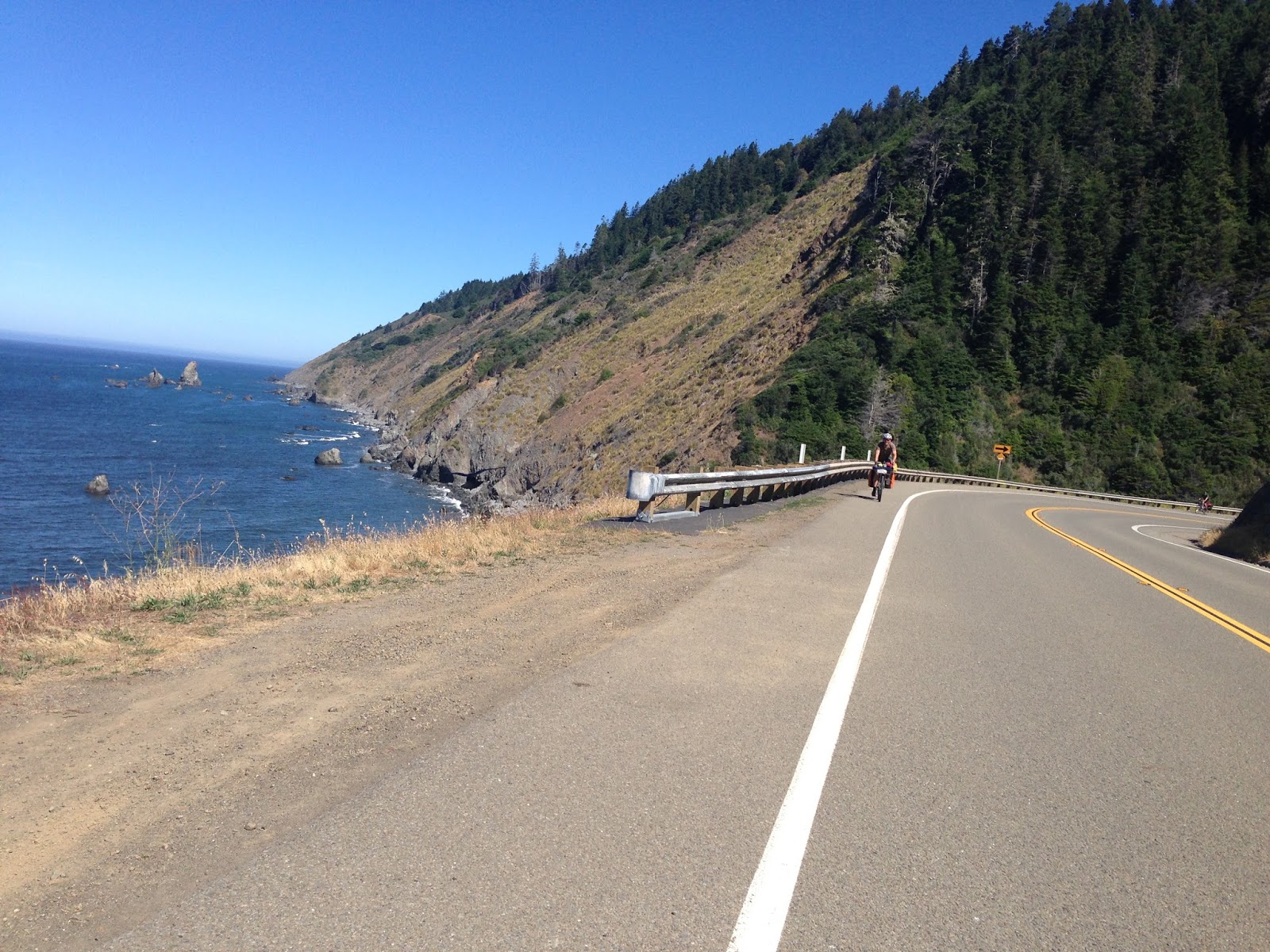
A friend and I were able to join a couple of other friends already on tour from Portland to SF in Crescent City and ride into Fort Bragg together before we went our separate ways to meet family and friends.  Here is a gallery of photos and thoughts about what I learned along the way.  It's not as if this was my first loaded tour having done NV on highway 50 a few years back and part of the Sierra Cascades route two years ago.

1. One way rental cars are a stellar way to drop into many places - A one way rental from Reno to Crescent City allowed us to join to tour in the middle of the trip from Portland to SF.  Coastal towns seem to have a lot more services and the price of a one way rental isn't too bad and gets you and your gear where you want to go.


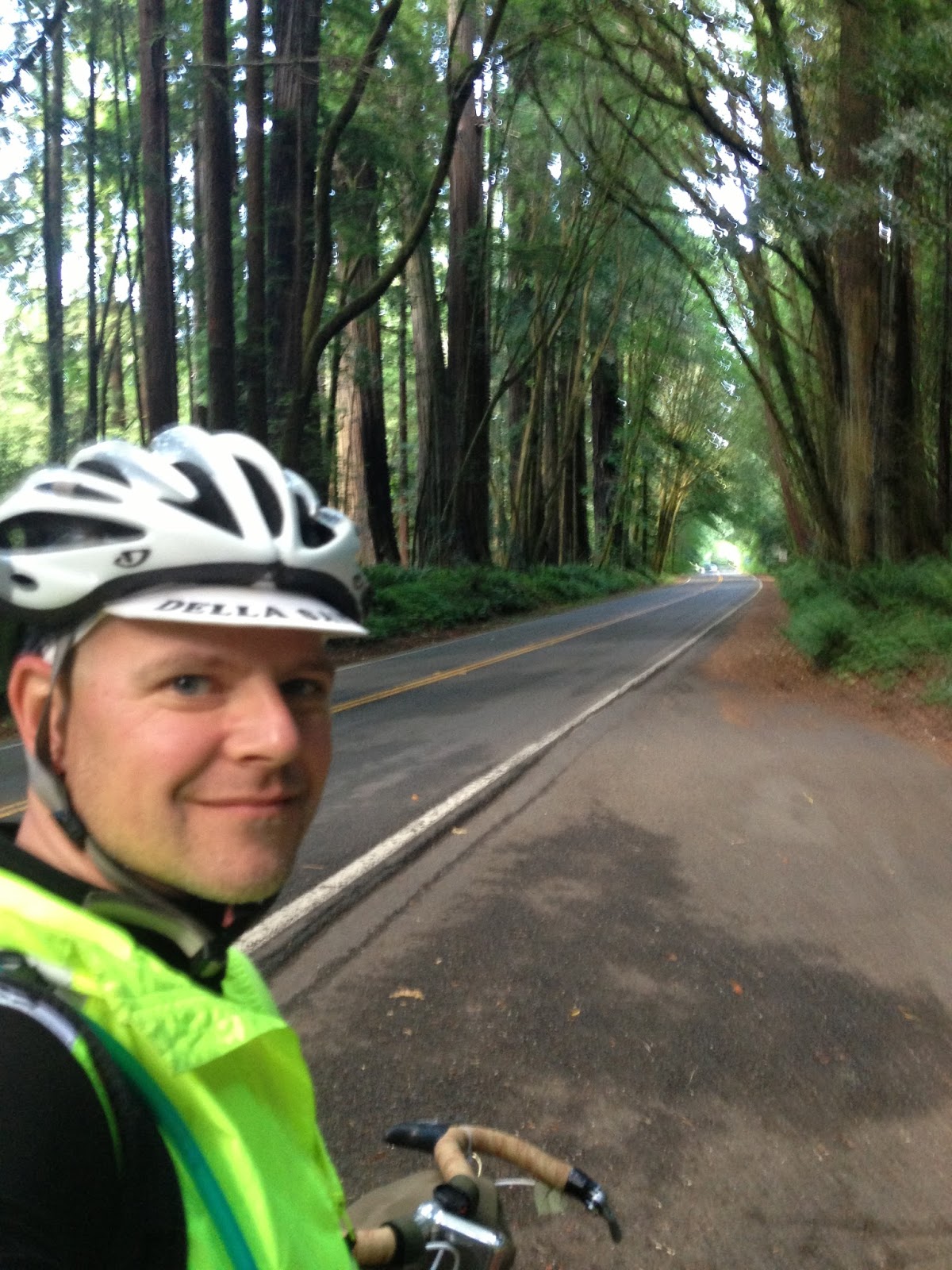
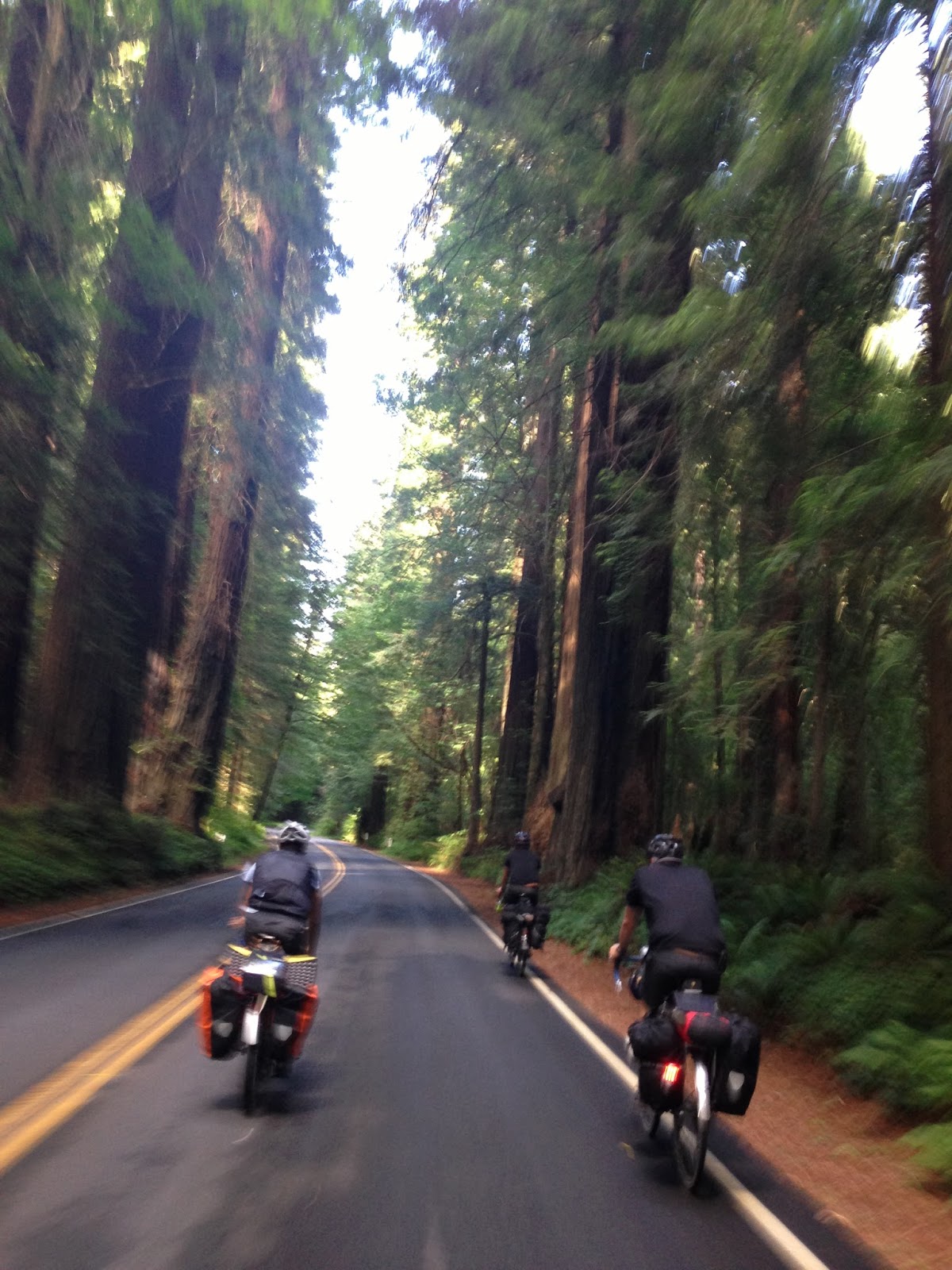
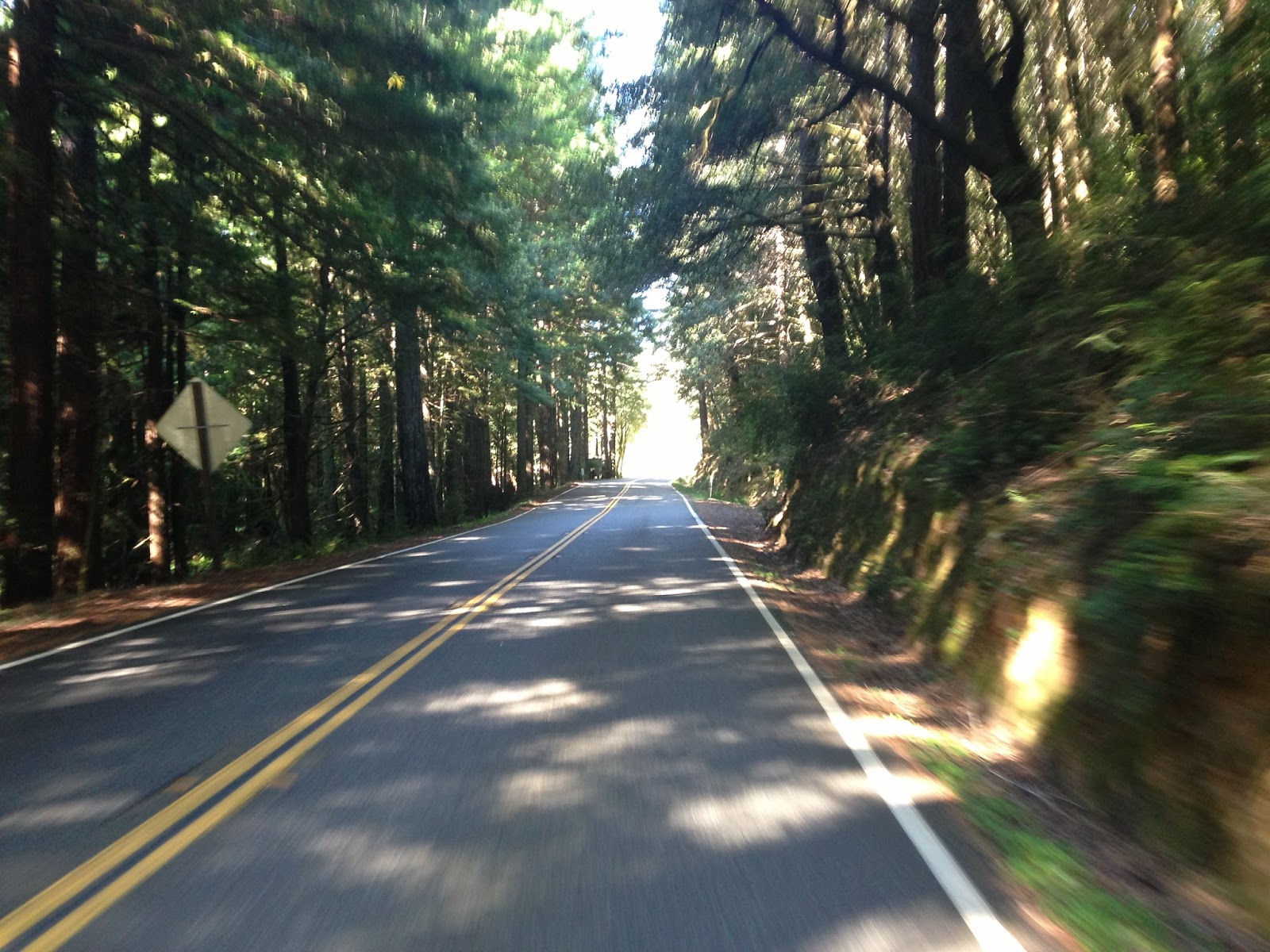
2. Neon is your friend.  I don't exactly go ninja when I ride normally but on rides where the tree canopy can suddenly take you into nighttime conditions on winding mountain roads, a neon vest and pannier rain covers make for good visibility for cyclists.
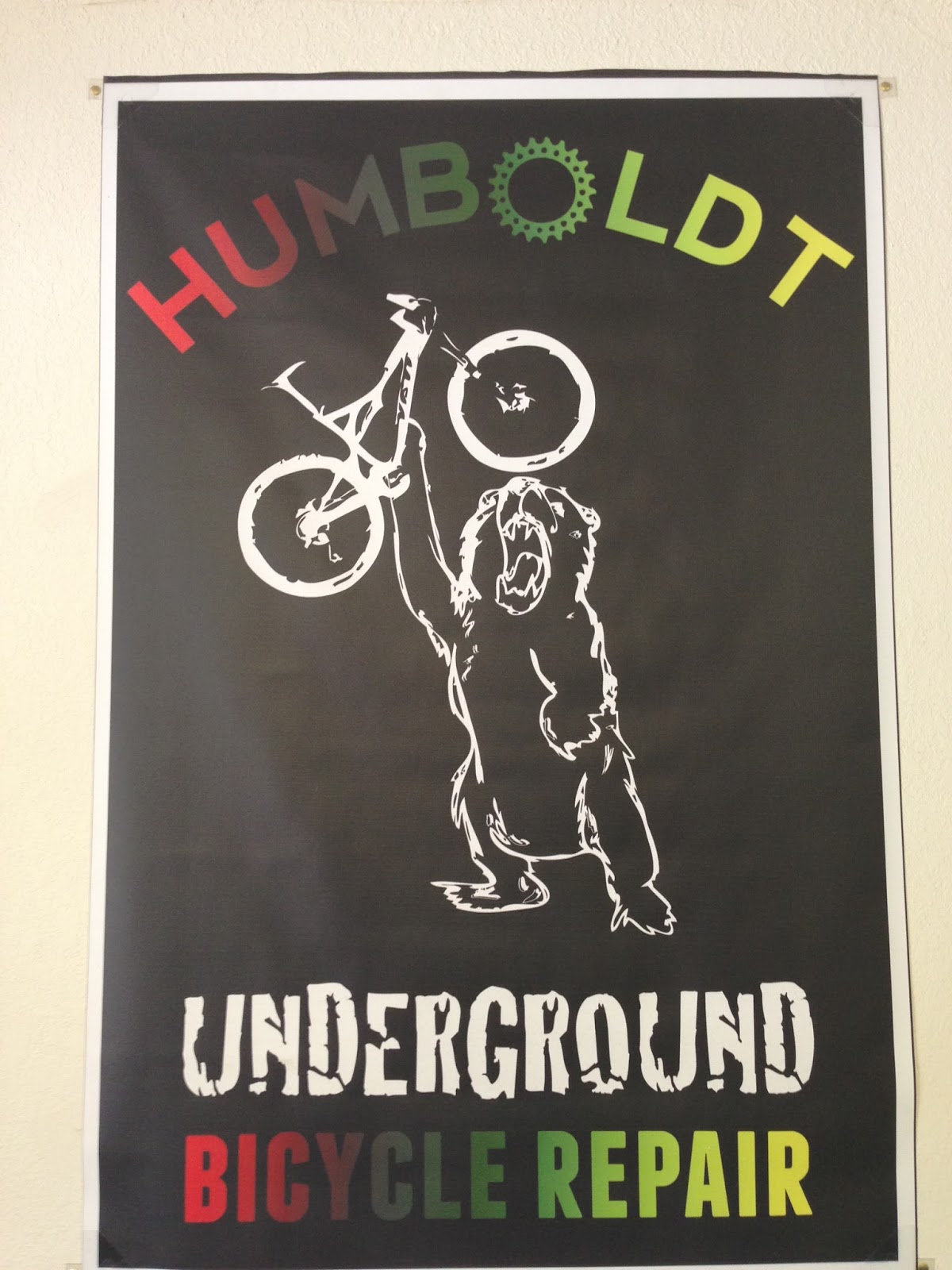
You never know where you might find a small bike shop.


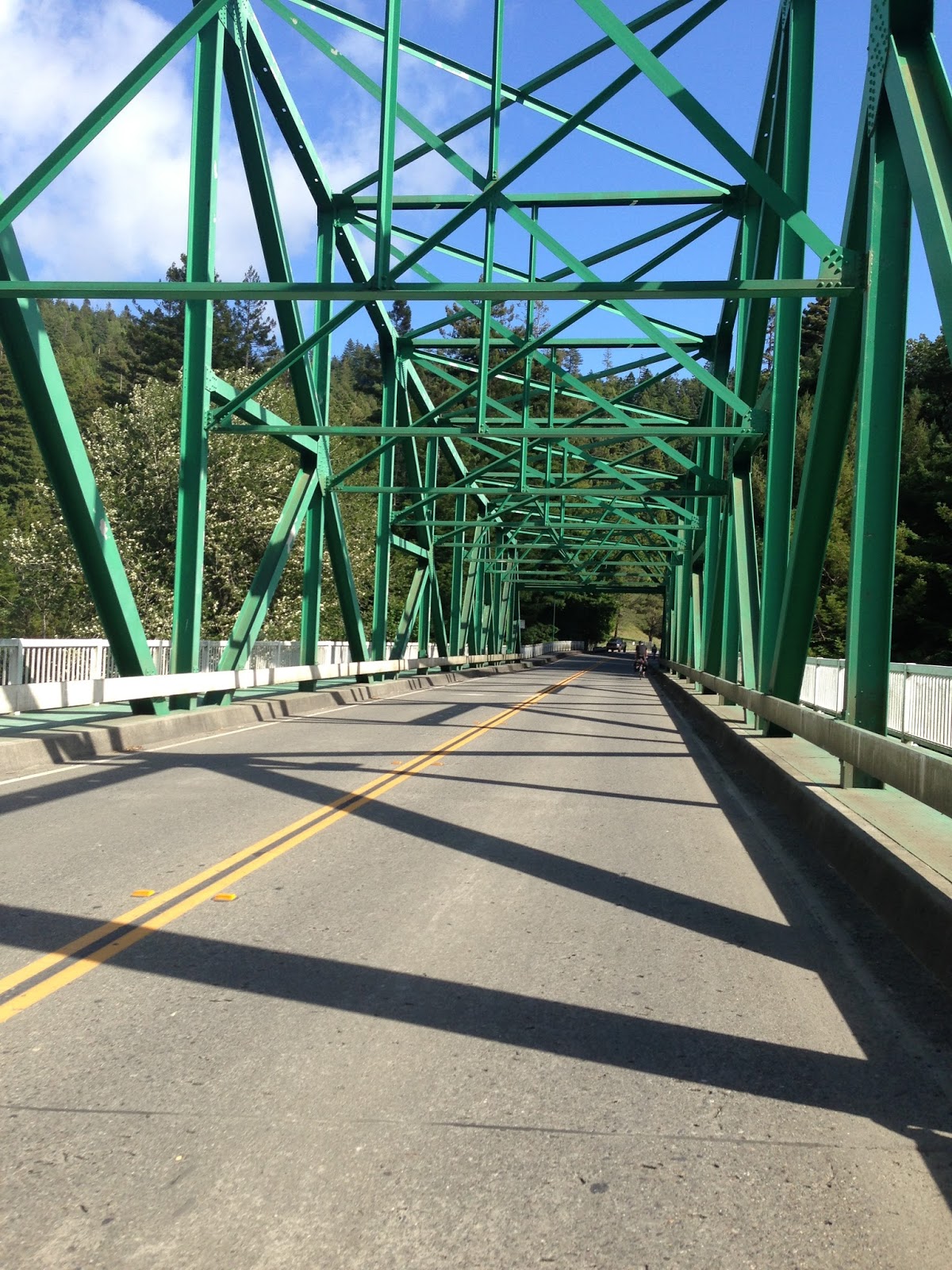
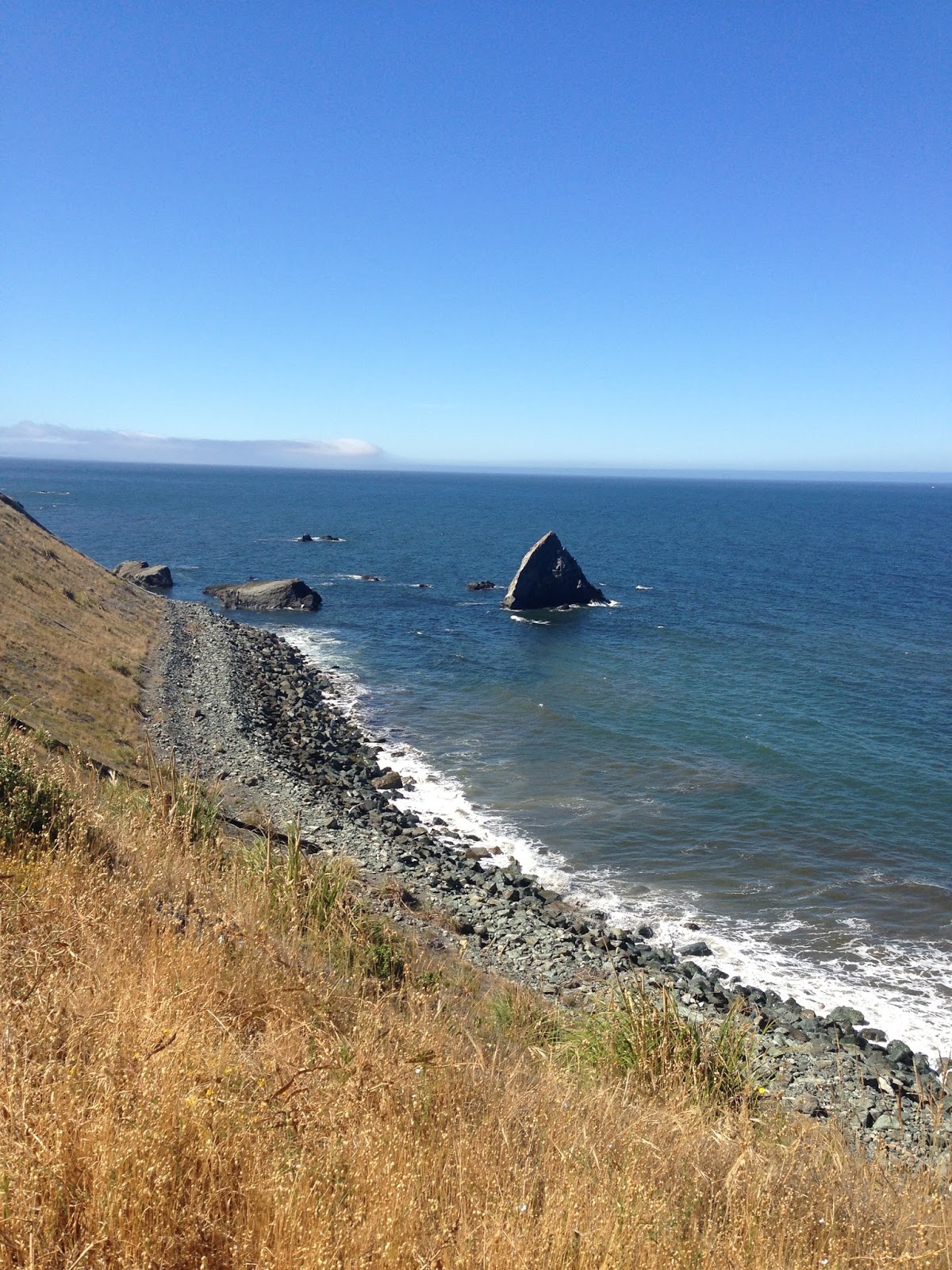
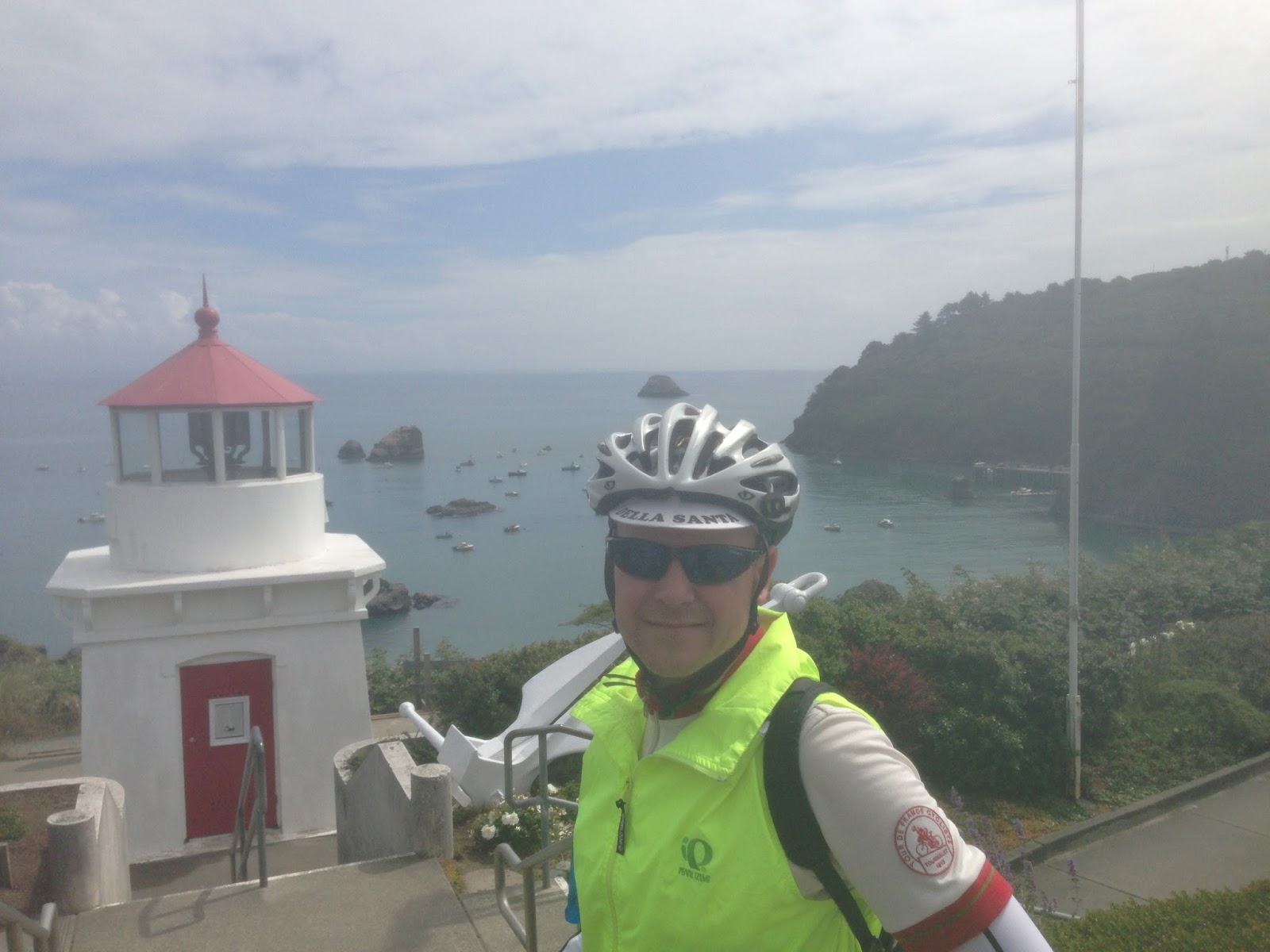
Nice view.
 3. In spite of reducing my touring gear to about 20-25 pounds I realized that once you add that camelback with water, and fill that handlebar bag and pockets, you're never as light as you think you are.  In this case the Rivendell Allrounder proved again that it was the way to go on a tour.

4. Fenders and the weather...in spite of the forecast for sunny and no rain before I left (which prompted me to not bother mounting fenders) I paid the price a bit with surprise rain the first two days of riding.  Lesson learned...unless you are riding through Nevada in the summer, mount fenders.
The text is worth reading.


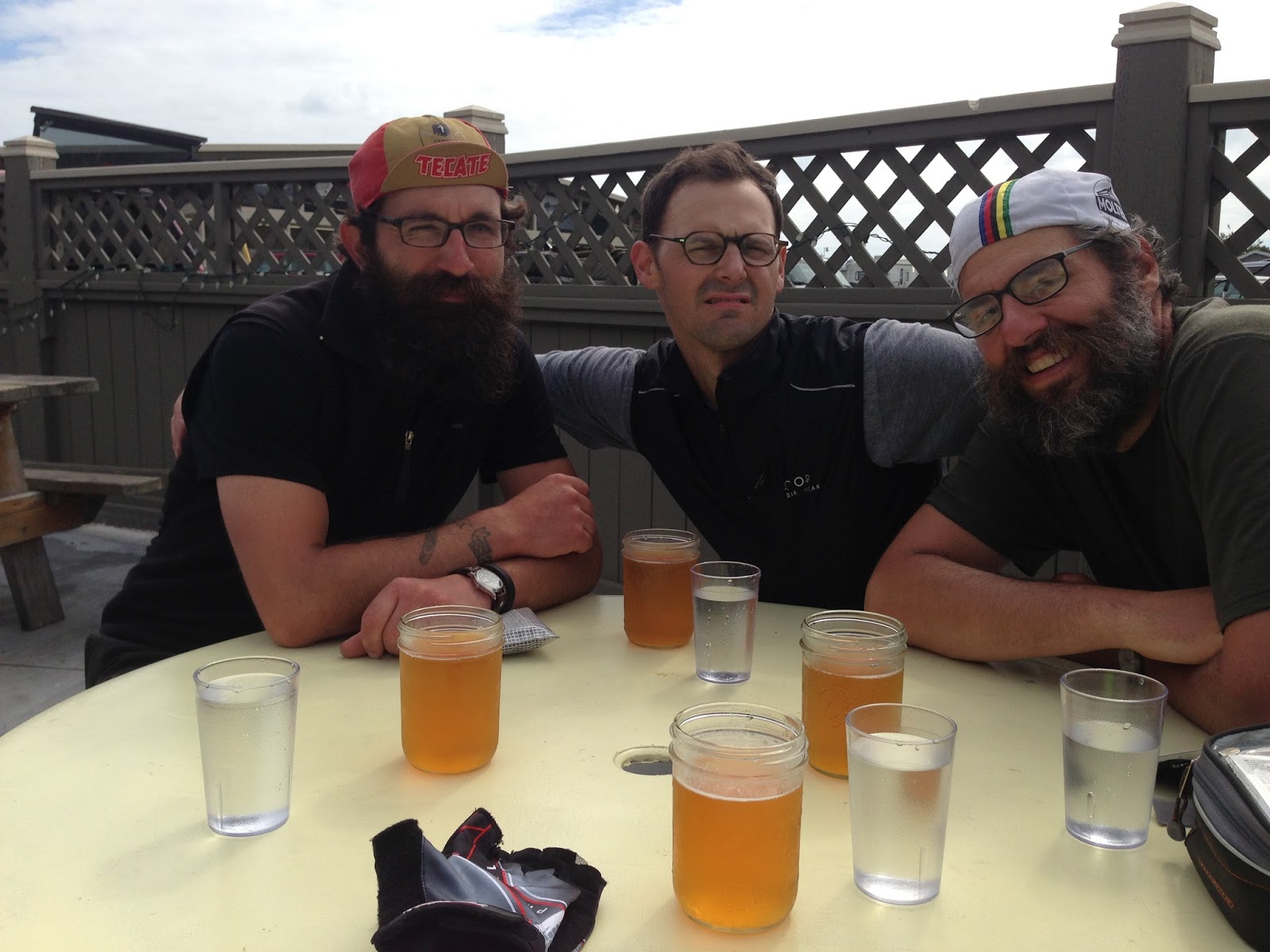
5. Sometimes Less is More.  Shorter days in the saddle (in this case about 50 miles) made for more opportunities to enjoy an afternoon beer with friends.  That's a good thing.


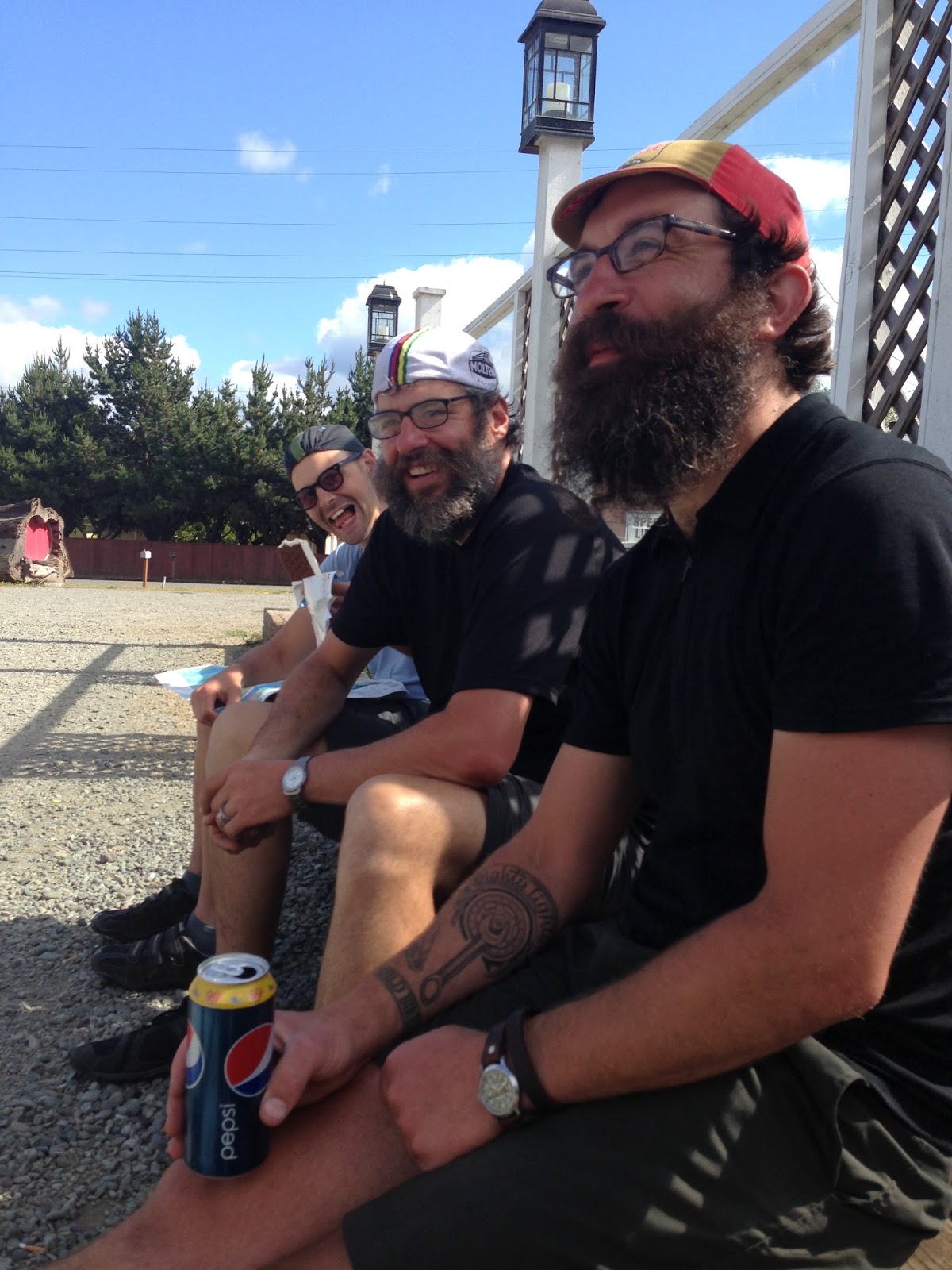
Ice cream sandwiches on a hot day!

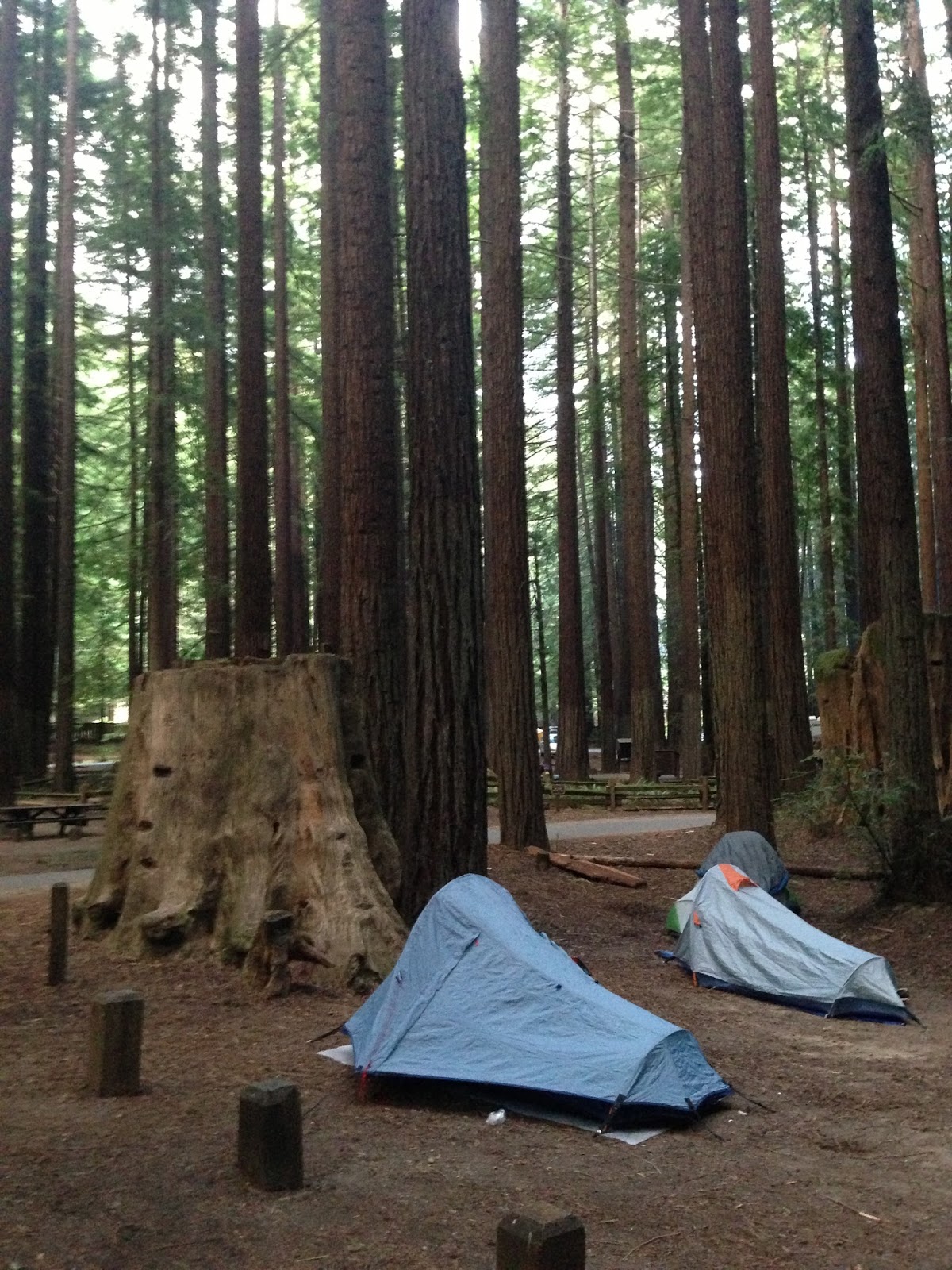
Feeling small and insignificant.


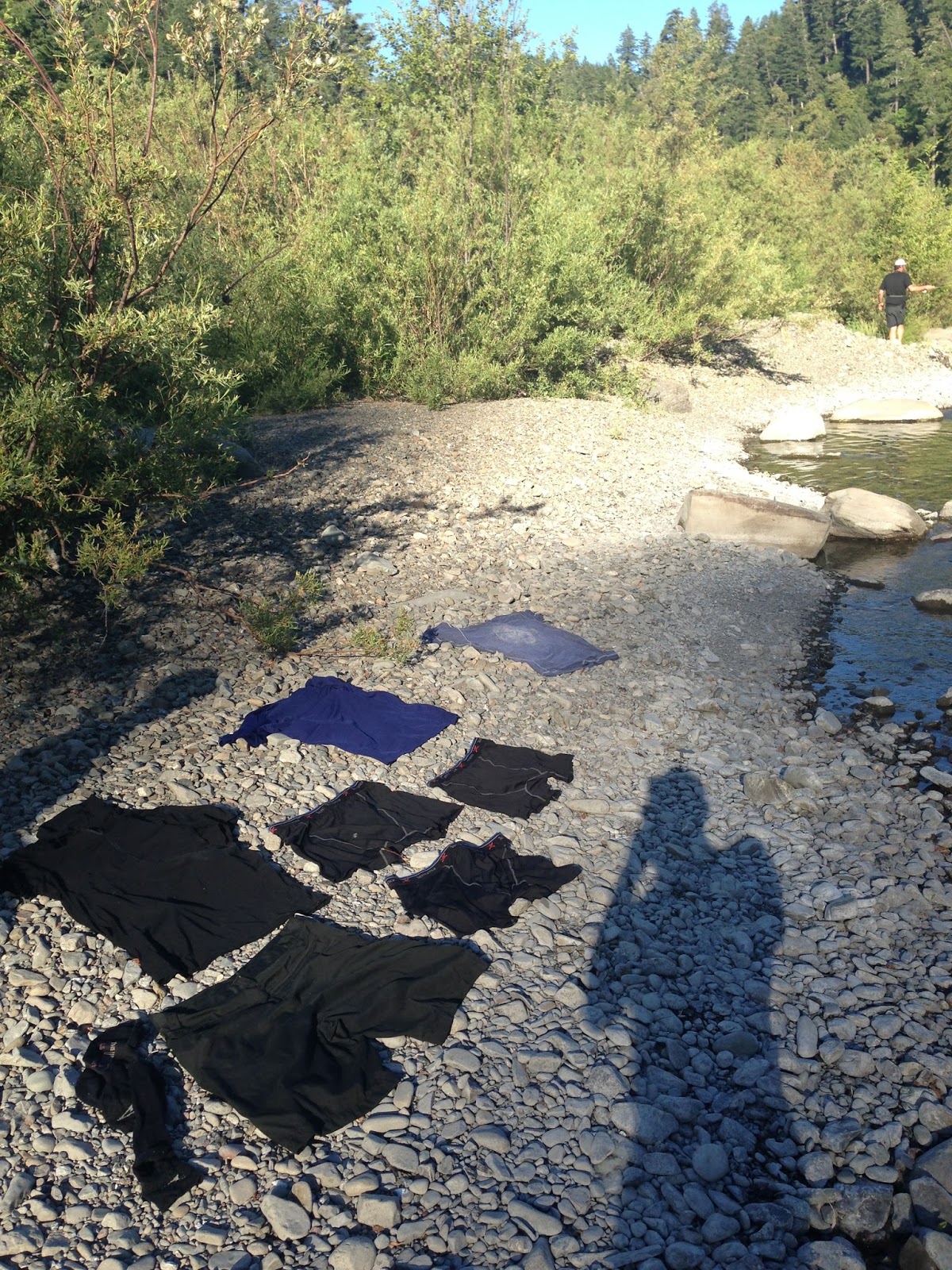
A river at the end of the day makes for a good bath and good fishing.
6. Showers vs. a Beautiful River.   I was so relieved to roll into a hike/bike camp one night when they had hot showers.  But the next day was spent washing off in a cool river and that proved to be even better than a shower even without soap.

Self Portrait with Dryer.

The Riv taking a rest.


7.  BBQd oysters may be one of the best post ride eats I've ever had.  I spent the rest of the trip craving these.

Darn...forgot my bottle opener at the camp.  Luckily we had a substitute.
8. Brooks Saddles...one of the wonders of the world.  I have to say my Imperial proved more comfortable then I imagined it could be.  And pretty.  And the previously mentioned ability to open a beer...that's a win, win, win situation.
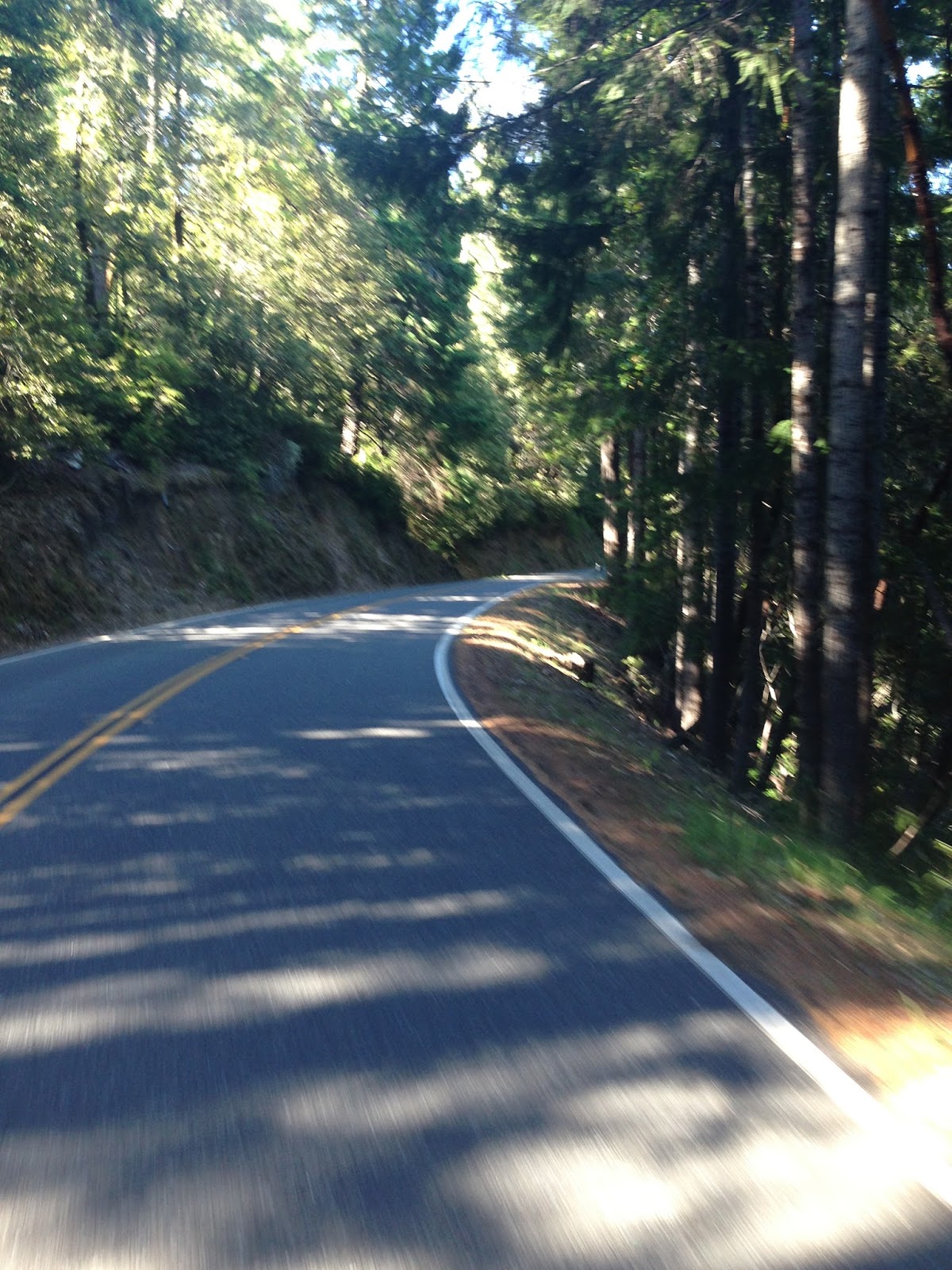
Descent!

No comment.

Nope...


9. Moustache Bars work fine on long rides.  Ok maybe not my first choice.  I had to do a quick bike change the day before and the Rivendell had mbars already mounted.  I figured I'd suffer through some discomfort which I did to a certain extent.  But in reality I think riding 50-80 miles in a day is going to stress your hands and wrists a bit no matter what bar you use.  All in all, moustache bars are not my first choice for touring but they turned out to be totally fine.


10.  Wool!  I've had the experience of riding along the coast in northern California before and am continually surprised how it is possible to feel both warm and cold at the same time because of the dampness in the air.  Wool makes the discomfort bearable.  Not sure what it is about it but it works.  That photo above is a mixture of wool baselayer from Rivendell and a wool short sleeved jersey from Rapha...ha...take that fashion police!


11.  It's still possible to get a decent draft when going 14 mph when the bike(s) ahead of you are shaped like tow trucks.  We did a bit of pacelining during certain stretches of coastal headwinds and it was a nice reprieve from the slog.


 12.  Unicorns exist in Fort Bragg!

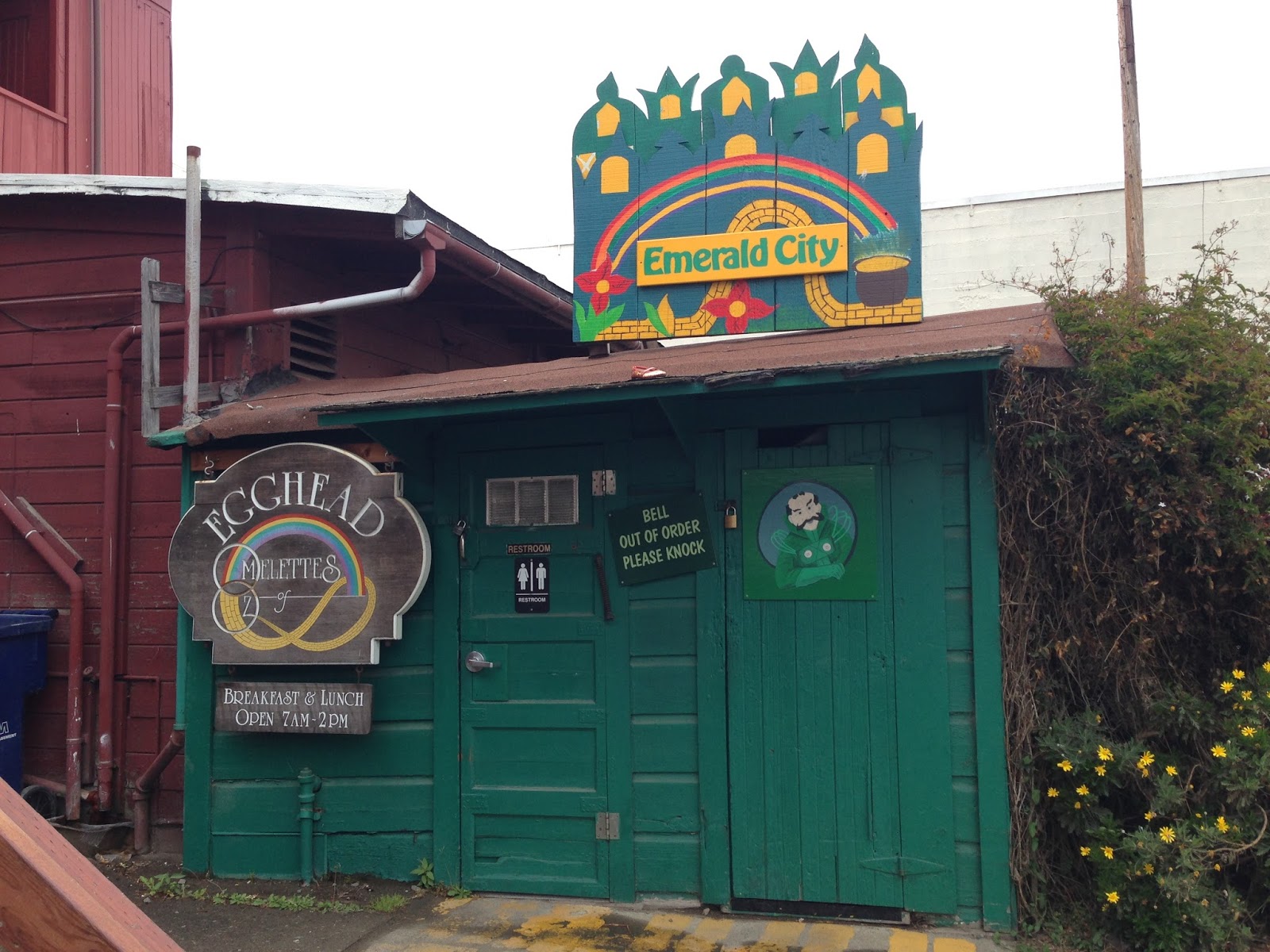
If you follow the yellow brick road it leads to a bathroom.

Last day...emerging from the forest onto the coast north of Fort Bragg.


0 Comments

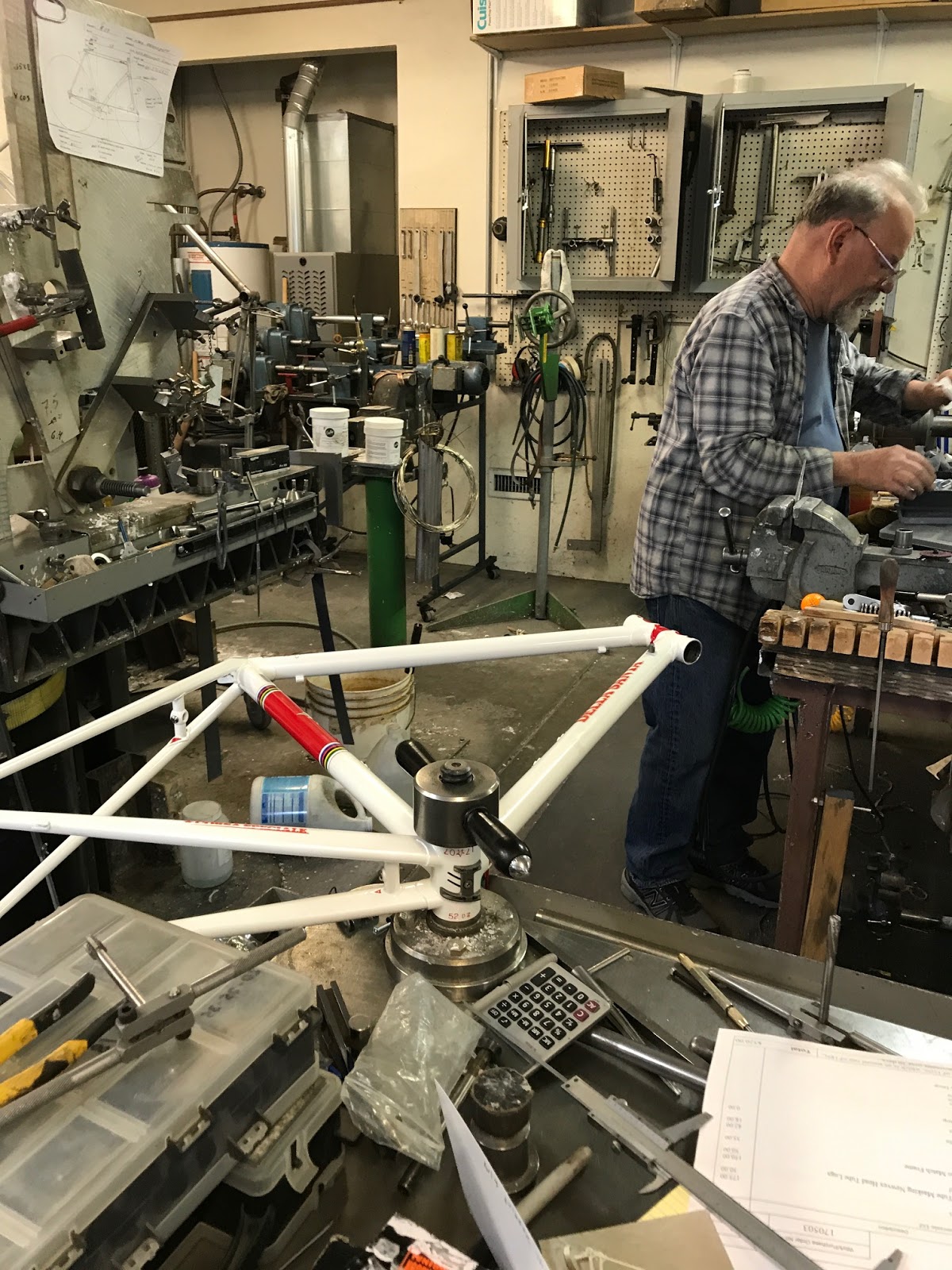
a visit to the della santa workshop

3/1/2018

0 Comments


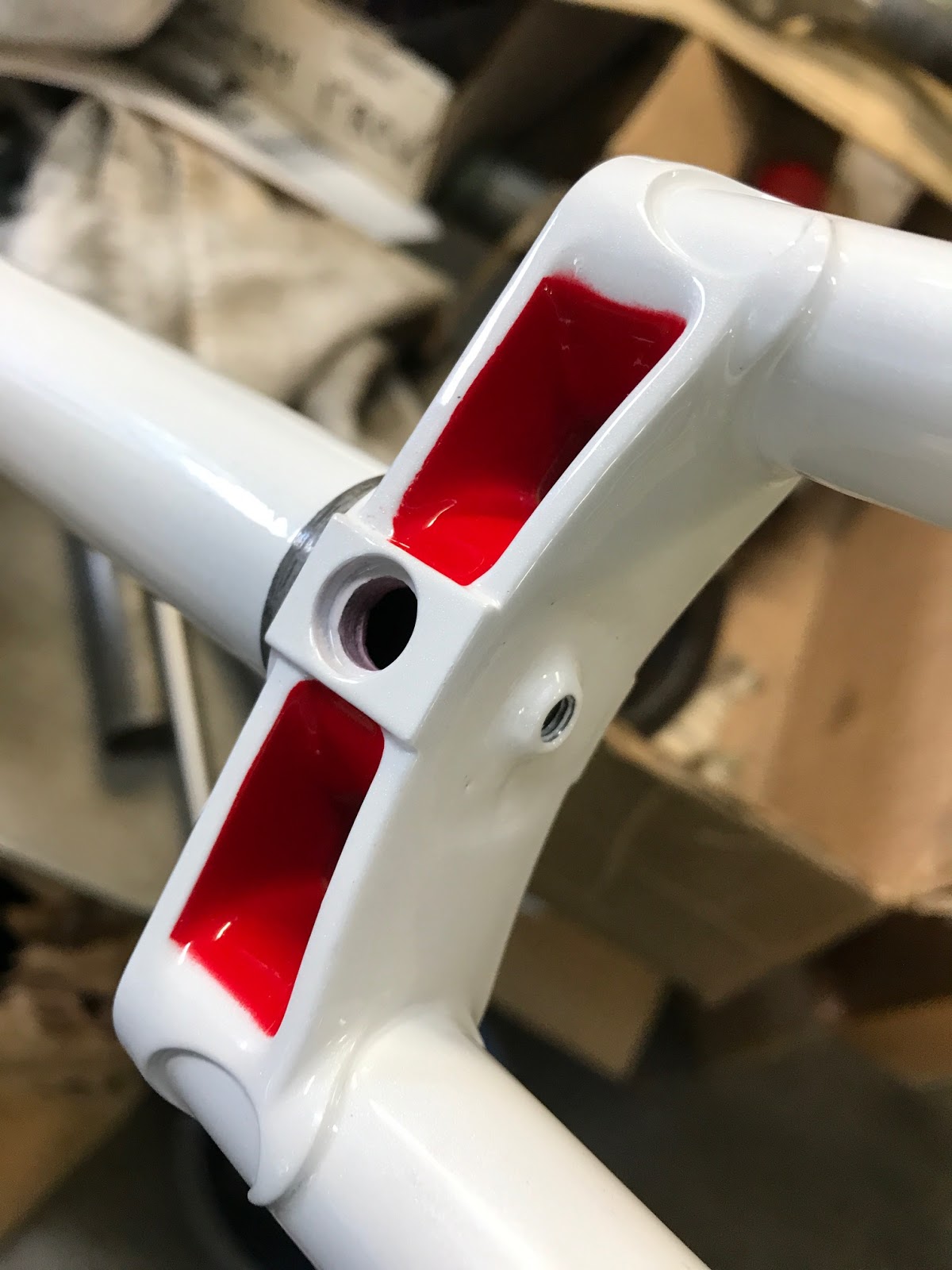
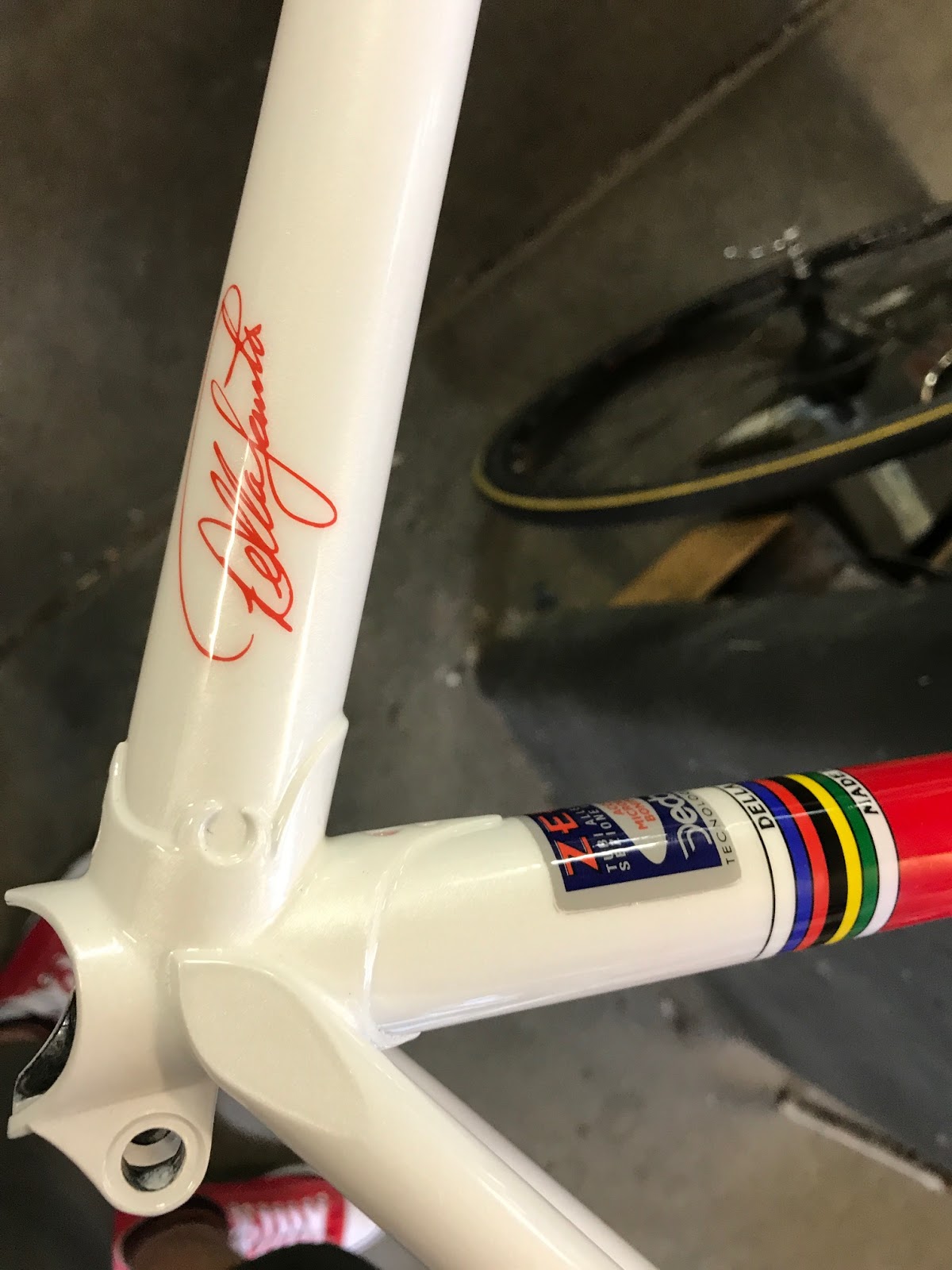
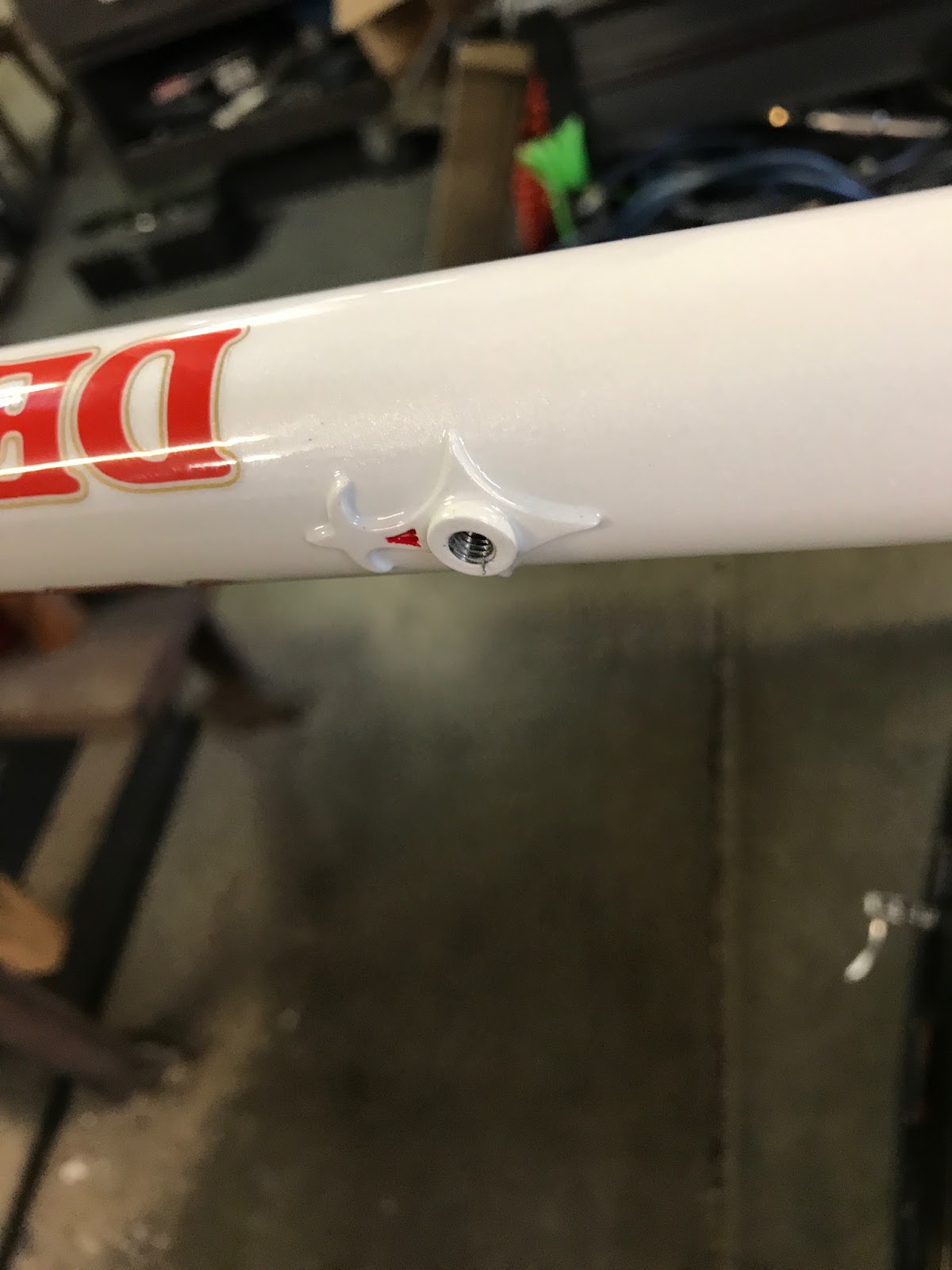
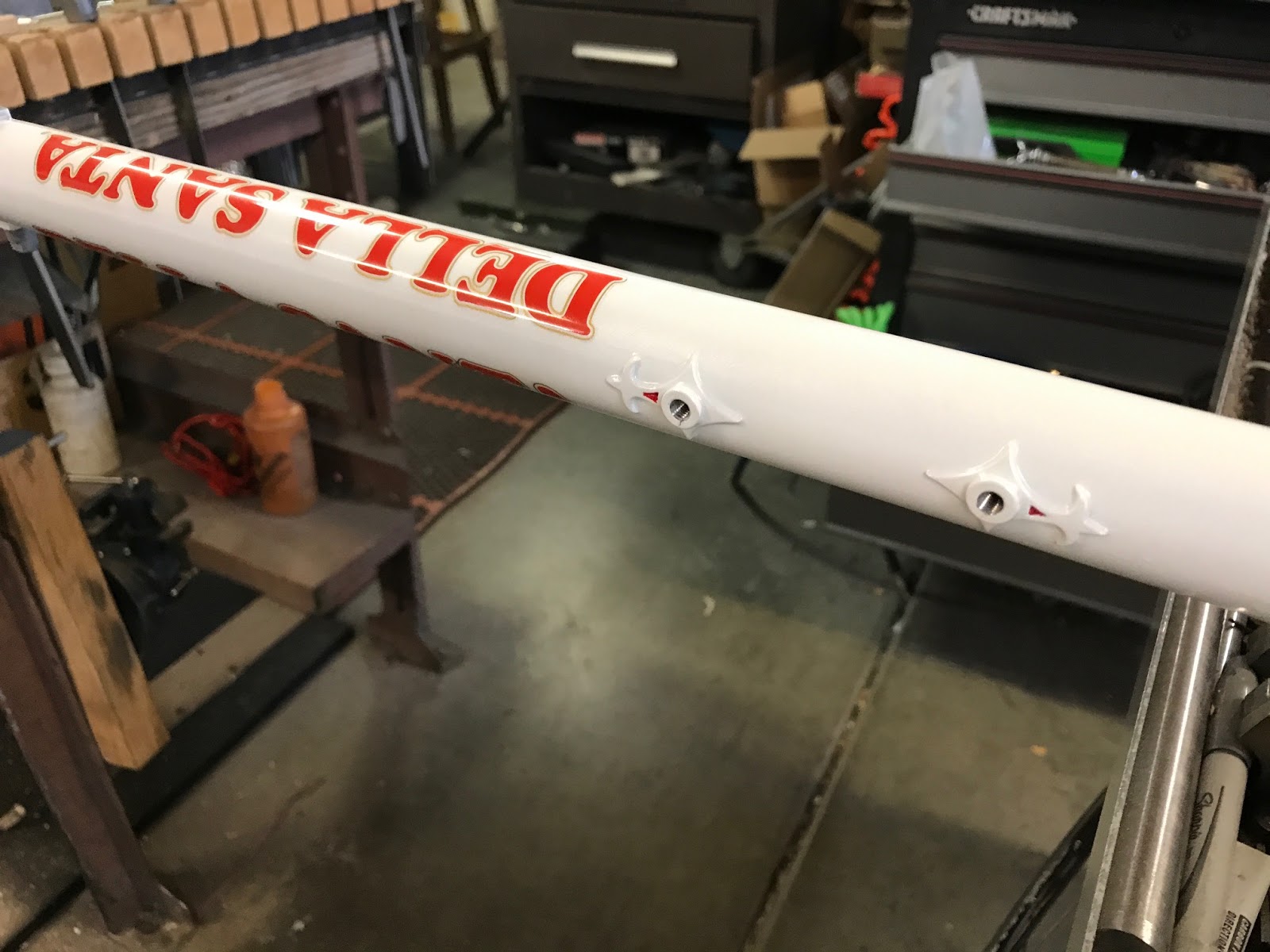
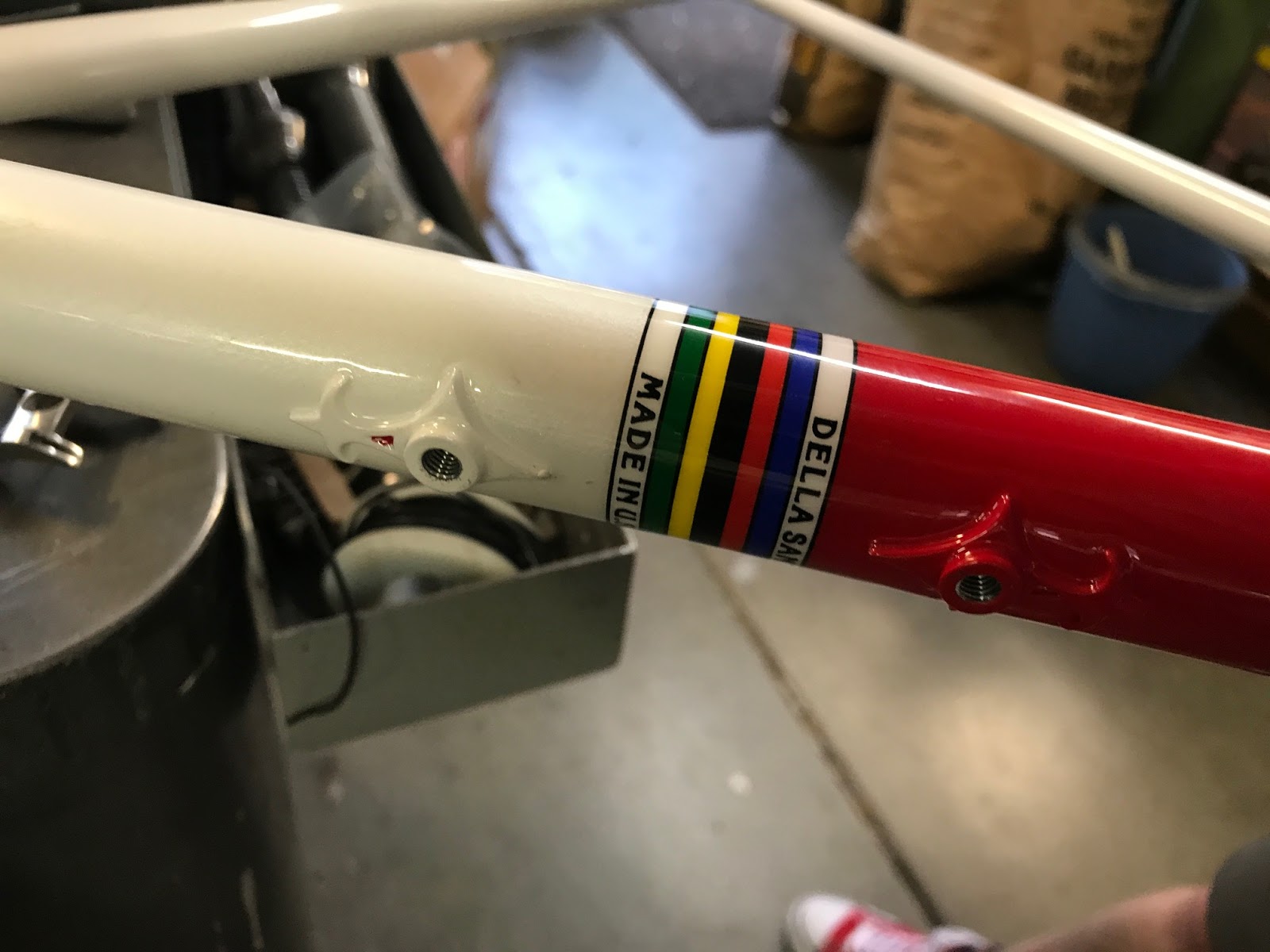
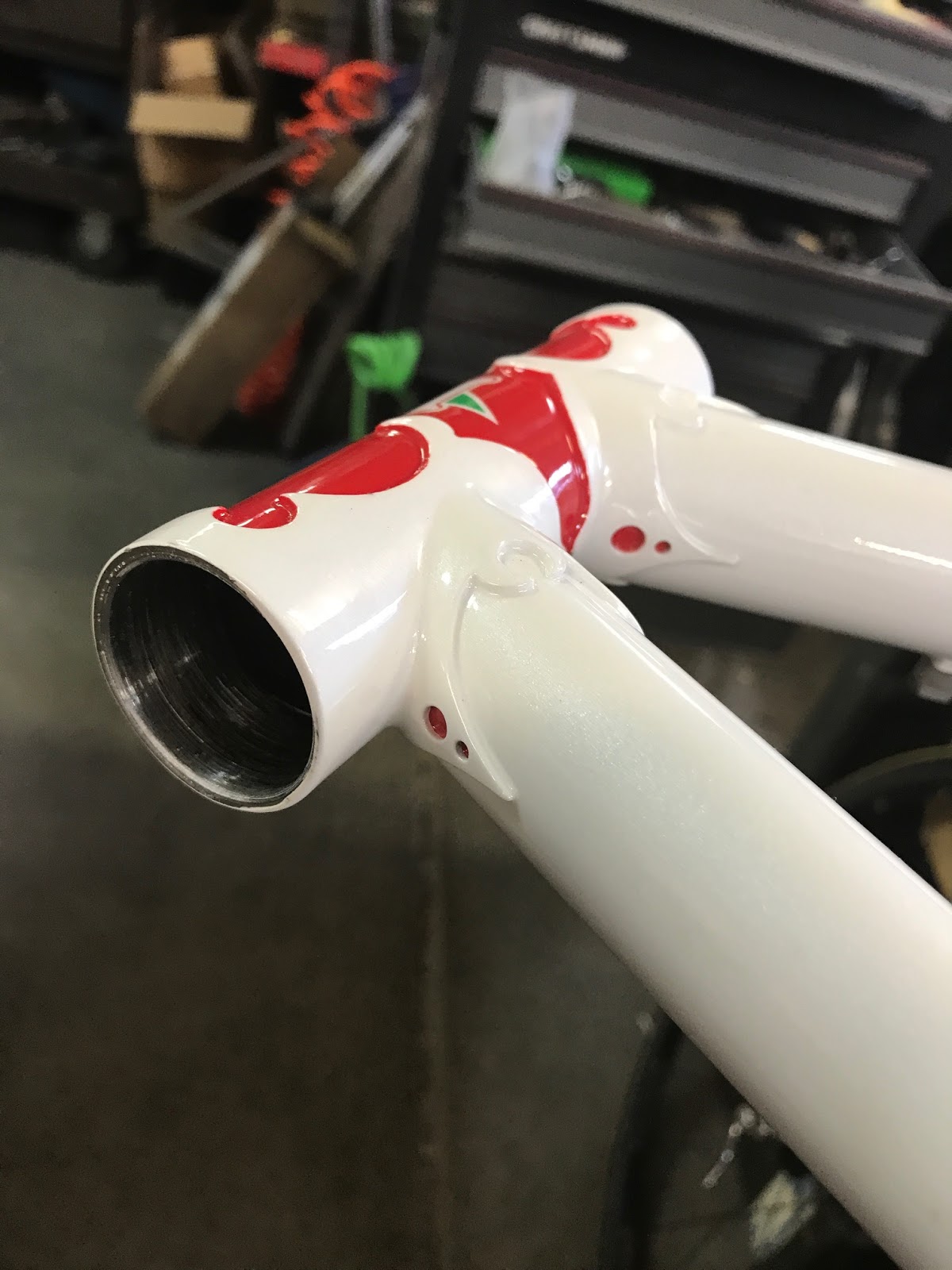
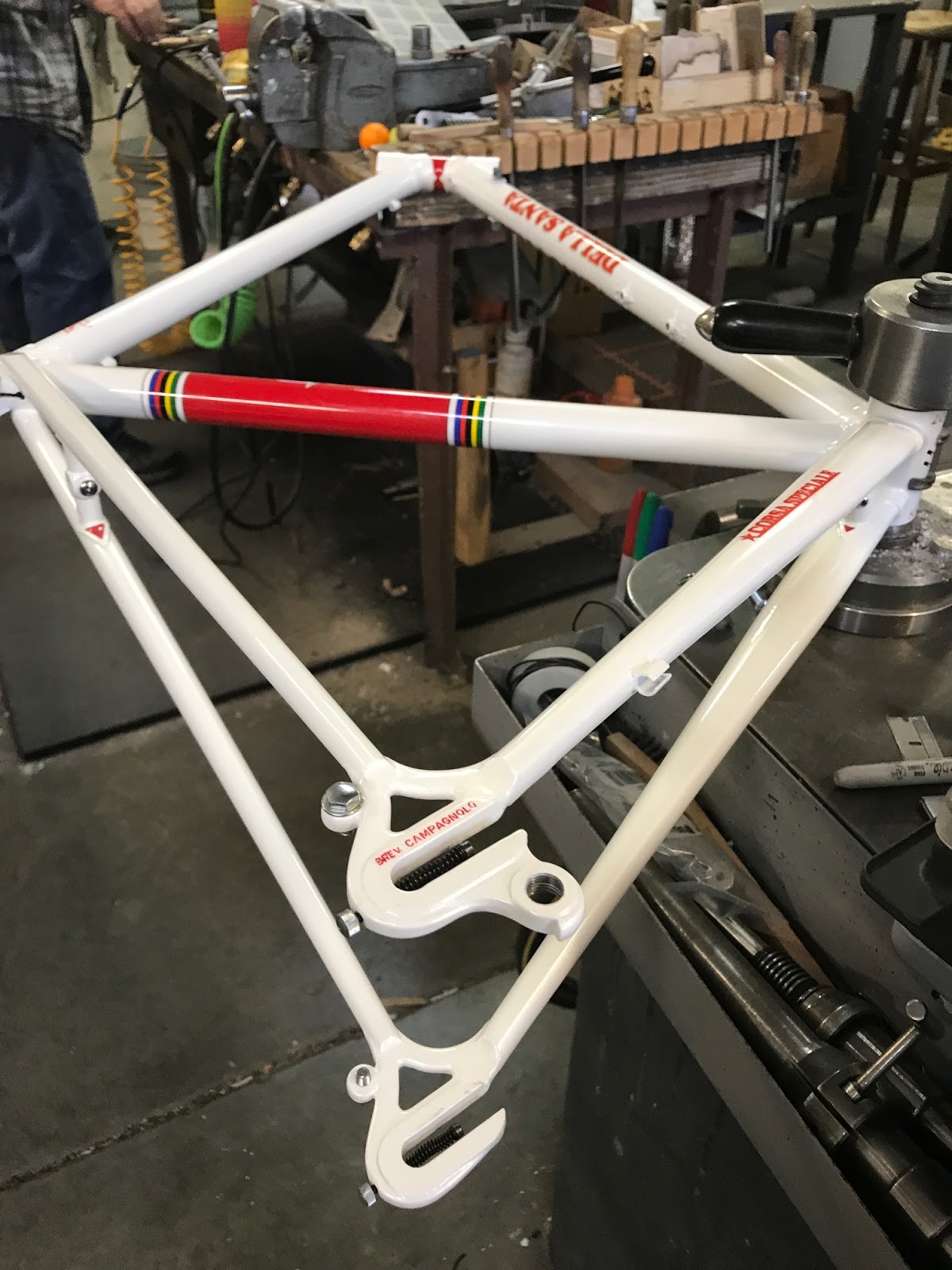
Or should I call, it "Santa's Workshop?"  Judging from the Red and White frame Roland was prepping maybe that would have been apropos.  Besides seeing the master at work I was regaled with stories about his time in the Navy and we talked about submarines and movies.  Not a bad way to spend a couple of hours.


0 Comments

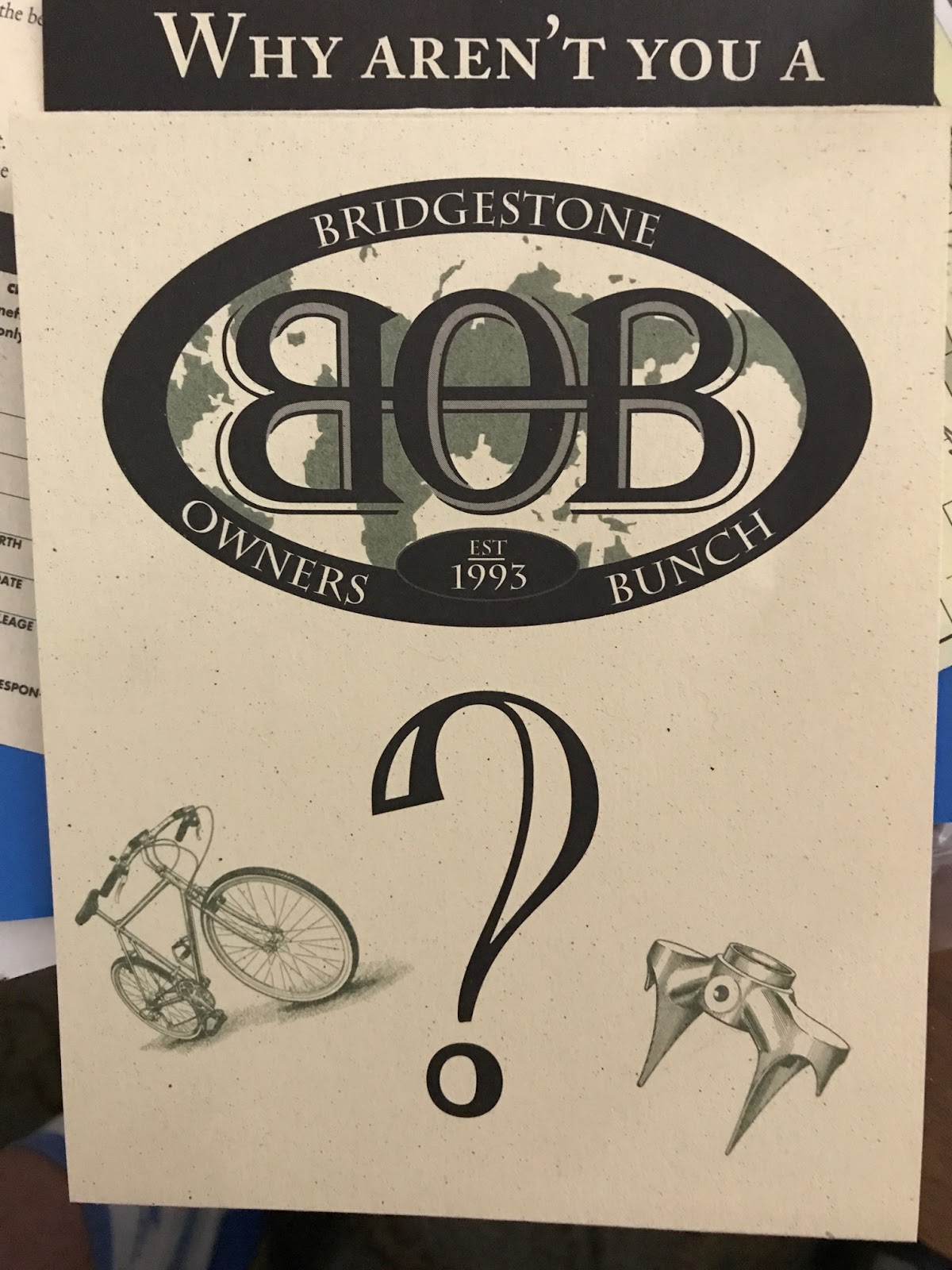
Why aren't you a bob?

3/1/2018

0 Comments


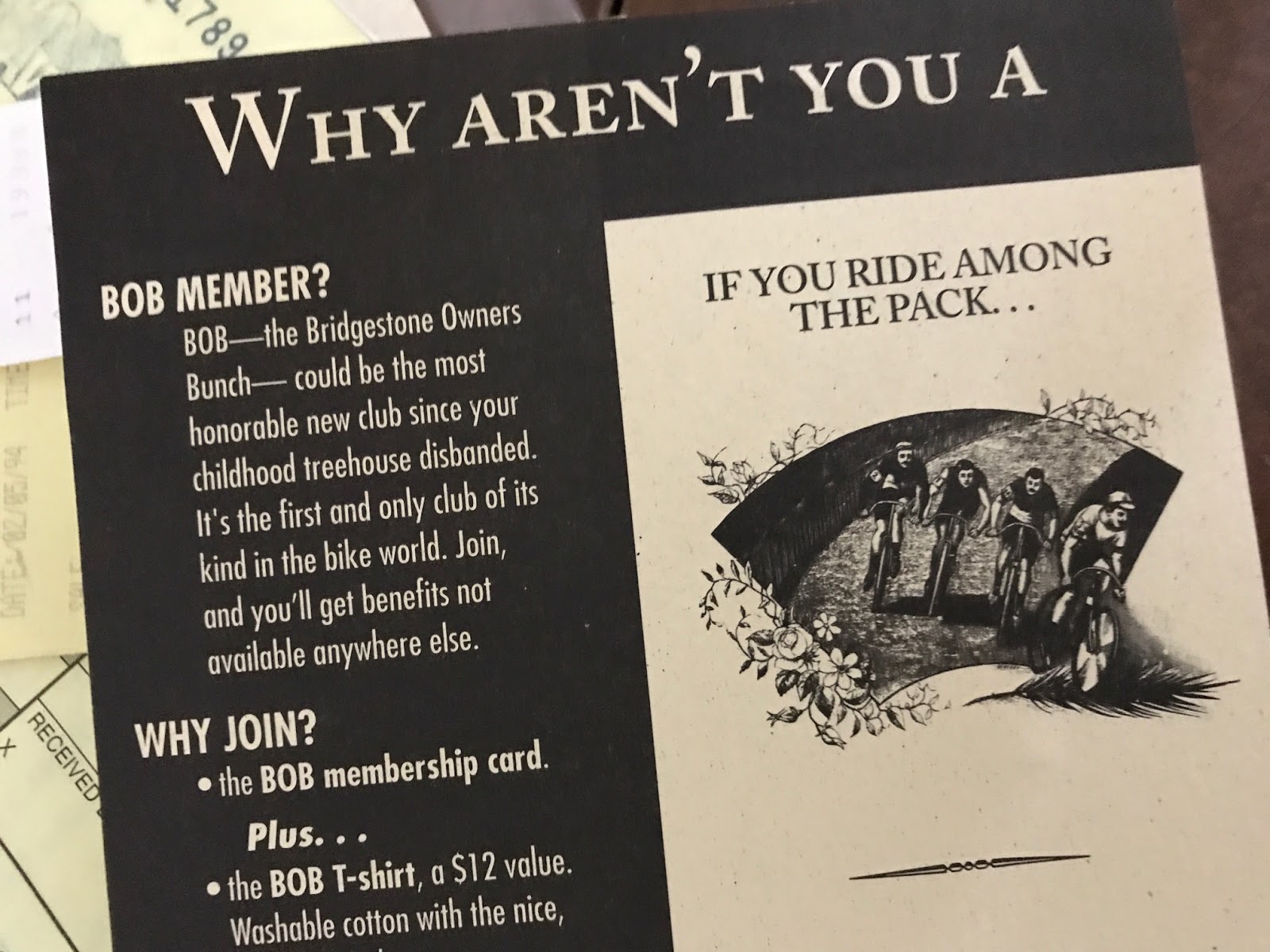
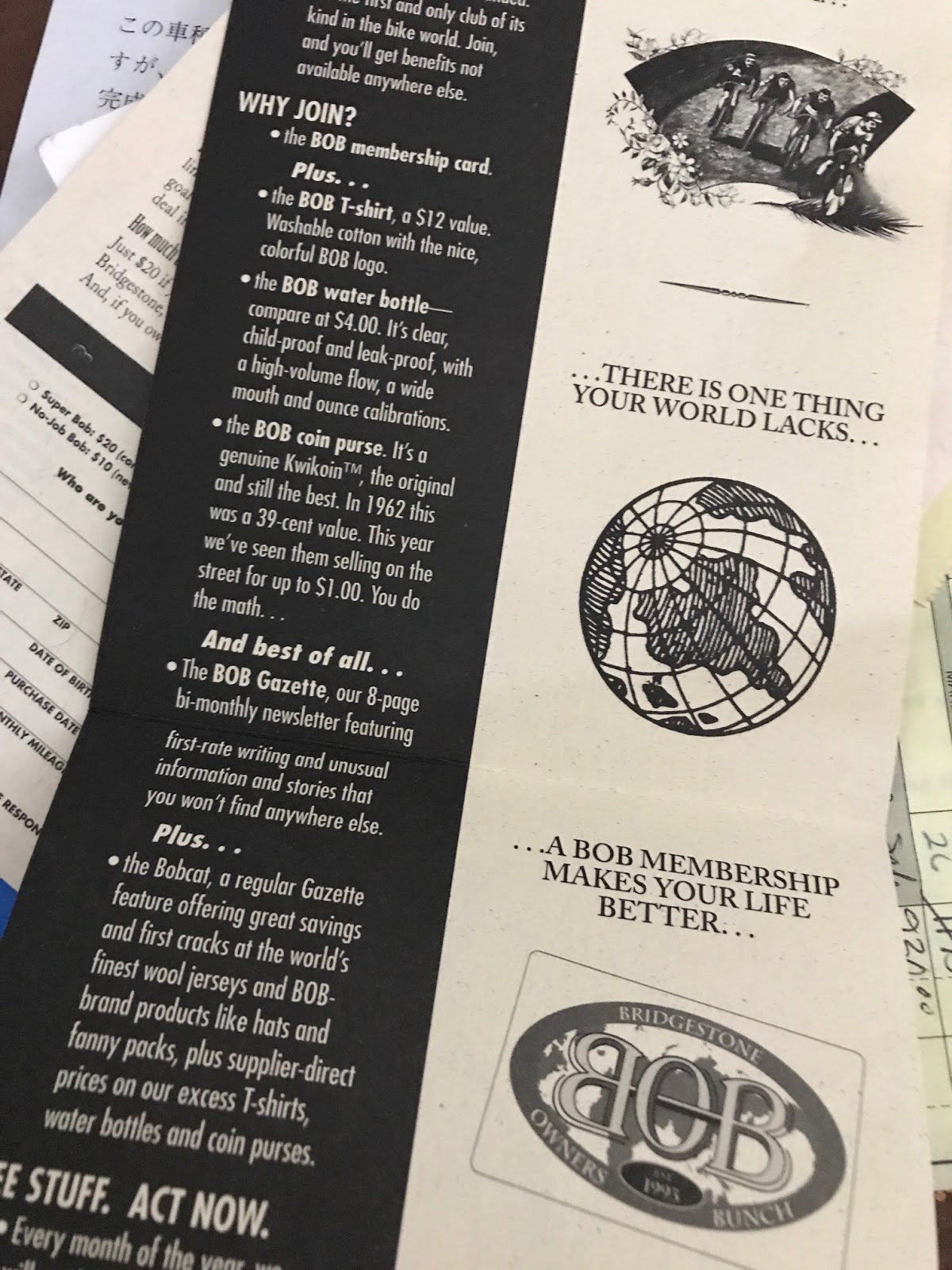
The other day an iBOB list serve member shared this little essay about what it means to be a BOB, or a member of the Bridgestone Owners Bunch.  I've owned numerous Bridgestones over the years and the general values of BOBs still are good values to keep in mind.  This explanatory essay is still a good reference point and clearly sets the stage for what would become Rivendell Bicycle Works in 1994.

What the Hell is a Bob?

"Originally, BOB was an acronym for "Bridgestone Owner's Bunch". It was started by Grant Petersen, American marketing Director for the Bridgestone bicycle company, based in Japan.

He wrote the advertisements for the company, and they were a bit unusual by including very little or any marketing hype. Instead, Grant took the effort to explain why the bicycles he helped design were good. He did this without puffery and without running down the competition. They were...thoughtful...advertisements. Thought-provoking. Cyclists who took the time to read and ponder them almost always found something of value. Sometimes, that led to purchasing a Bridgestone bicycle.

The Bridgestone bicycles Grant helped design were also unusual in bucking fashionable cycling trends. His felt bicycles should remain functional and high in value. Part of that value came from selecting parts and components that worked reliably, were repairable, and were proven. This philosophy was controversial, and Grant/Bridgestone were labeled anachronistic by some magazine editors and industry insiders. One magazine editor labeled Grant a "retro-grouch" -- someone who crabbily held onto old stuff instead of embracing the new.

In many ways, time vindicated Grant and Bridgestone. His mountain bikes led the field in many areas -- short chainstays, steeper angles, more lively handling, repairability. His road bikes -- The RB-1, RB-2 and RB-T -- were solid values that road well and were prized for their handling. Grant took the risky but courageous step of specing components outside the groups offered by a single manufacturer. As a result, Bridgestones often sported an eclectic parts mix. For example, the MB-0 (it slotted in above the MB-1) had a Mavic crank and hubs, Dia-Compe brakes and SunTour derailleurs. It may seem a bit ironic, but Bridgestone lead the industry in these key areas while holding fast to a philosophy that bucked cycling fashion for fashion's sake. For a small player in the American bicycle market, Bridgestone set some real standards -- practical standards -- for the competition that shaped the development of MTBs in particular.

Along the way, Grant introduced an early hybrid to the market. Actually, there were several models, and they were called the XO-1, XO-2, and XO-3. Instead of equipping a road bike with flat handlebars and knobby 700C tires, Grant's XOs (pronounced Eks-Ohs) used slick 26" tires and lightweight road bike frames. This was unusual in and of itself, but whatreally made the bicycles controversial was their handlebars. Grant designed them, inspired by the semi-drop handlebars used by Japanese schoolchildren (full drops were considered a temptation to speed contests and the flattened type was a compromise). Imagine a drop-type road handlebar that has been squashed almost perfectly flat. He called it the Moustache Handlebar.

Some people really like these handlebars, and they are still available through Grant as an aftermarket component, made by Nitto and Hsin Ling, depending on the model. They require a willingness to adapt to the new shape, and their comfort and utility depends on a combination of stem height and reach as well as creative placement of the brake levers.

Unfortunately, many people were unable or unwilling to adapt to Moustache 'bars and some of the most vocal worked as magazine editors. The handlebars were loudly panned in the press, and it was in one road test of an XO-1 that an editor coined the "Retro-grouch" label and applied it to Grant. When Bridgestone sales fell off, some industry insiders cited the Moustache 'bars as an example of Grant's retrogrouch philosophy, and an example of the "adapt or die" rule of market share.. Some went so far as to blame the company's pullout on Grant's excessive sense of ownership. While there is a grain of truth to that there were larger reasons for Bridgestone leaving the American market, including a changing economic climate and Yen-Dollar valuation. I'll come back to this in a moment.

Grant was unique in the industry, and his input made Bridgestones different from other bicycles. They embodied a philosophy of lasting value, function and craftsmanship.

Certain kinds of cyclists found this philosophy appealing and liked their Bridgestone a great deal. Grant wanted to create a community spirit and feel for the owners of Bridgestones, so he started the Bridgestone Owner's Bunch, or "BOB". For an annual fee, subscribers (or "members" as he called them) would receive a newsletter and the opportunity to purchase some unique merchandise, like a Kwickoin coin purse imprinted with the BOB logo, hats, T-shirts, canvas wallets, Brooks saddles imprinted with the BOB logo, and so forth. In the newsletters, Grant shared his thoughts and philosophy and views as an insider in the bicycle industry. As a community, BOB was a real success. This was quite remarkable, as the community was based on the newsletters that arrived by post. The organizers (Grant and B'stone employees) were readily accessible by telephone or in person to local members.

Bridgestone was never a major player in terms of American bicycle sales. Because the bicycles were different and didn't sport the latest components, they required a great deal of explanation in order to sell. They were a great value, but that value wasn't immediately obvious to many potential buyers, especially in an industry that was increasingly dependent on creating and selling "the latest". Also, there were price breaks available to manufacturers who speced one company's components throughout their product line. There were a number of other reasons why Bridgestone lost market share, all related to changes in the industry.

Shimano introduced whole component groups designed to work well as a system. The market changed and buyers demanded easy shifting that made it easy to master the mechanics of shifting. Bicycles that didn't sport the latest innovation also did not catch the buyer's eye, and dealers found that "If it doesn't click, it won't sell". Much the same thing happened when MTB suspension forks were introduced.

All of these and more were factors in Bridgestone leaving. When the Yen gained in value compared to the American dollar, many Japanese companies felt the pinch. Miyata pulled out. SunTour eventually went bankrupt. Manufacturers switched production to other countries with cheaper labor rates. Materials other than steel were introduced to the market. TiG welding often replaced brazing and lugs in mass-production assembly. Glued composites became viable as the cost of production declined and the technology matured. Taiwan bloomed as a bicycle producer. In this climate. Bridgestone found it was uneconomical to continuing selling bikes in this country, so they closed their American operations.

When Bridgestone closed, it liquidated its remaining stock of bicycles and frames. Some were sold through dealers, but much of the warehouse stock was sold to BOBs at reduced prices through the last several newsletters. Grant lost his job, as did the other people involved in Bridgestone's American operation. Of course, this also meant the end of the BOB group and newsletter-based community.

A Stanford graduate named Piaw Na started the newsletter anew as an e-mail listserv, using the Internet. Because it was Internet-based, it became known as iBOB or I-BOB. There was no membership fee, but it did foster and maintain much of the same sense of community among Bridgestone bicycle owners. More importantly, it attracted other bicyclists and those people interested in the same basic philosophy espoused in the bikes Bridgestone marketed under Grant's direction.

What is this philosophy? In a nutshell, BOBs value proven equipment that is repairable or long-lived, which adds to the value of a component. BOBs recognize that expertise comes from involvement, and it can be satisfying to learn enough about an activity to become good at it. BOBs also realize that expertise can be bought -- but if one does, it sometimes comes at the cost of personal involvement. There is a long list of things that fit these general categories and philosophy: Wool over synthetic insulation, waxed cotton canvas over nylon with a urethane coating, indexed shifters with a friction option or pure friction shifting over dedicated drivetrains.

In several of the BOB newsletters (called the "BOB Gazette"), Grant waxed eloquent on the uses of beeswax, and told how to prepare it by kneading the raw beeswax until it was soft. After kneading, it wouldn't flake and could be used for any number of things. For example, beeswax makes a dandy thread-locking compound for threaded headsets and other threaded fasteners. Beeswax typifies the BOB philosophy, and so it has earned the term "BOBbish". In many ways, you could say BOB is about beeswax!

Grant was careful to craft the original BOB on sterling values, and these (hopefully) continue to the iBOB list of today. BOBs are friendly. BOBs are tolerant of other's views. BOBs are always willing to help new cyclists or fellow cyclists. BOBs are honest, and they never, ever lie. They're probably also thrifty and loyal. iBOB is -- or =should= be-- a safe place to ask and ponder questions and philosiophies as they relate to things BOBbish.

After several years of very dedicated effort, Piaw stepped down as list administrator and the position was assumed by Canadian iBOB Michael Slavitch. Michael did a terrific job of transferring Piaw's archives and put up a web-based site for the archives and list administration. He ran the list on some older equipment that sometimes failed. The list was actually down for awhile until it found its present home.

iBOBs have a lot to be thankful for, including the creation and continuance of a pleasant community of like-minded cyclists. I know I look forward to reading my iBOB email each time I turn on my computer. It is amazing how much I have come to care for my FellowBOBs, and I am pleased to consider them among my circle of friends. I have met several in person and it is gratifying to find iBOBs are nice folks in Real Life too!

No explanation of BOB would be complete without a postscript about Grant Petersen. After he left Bridgestone, he founded Rivendell Bicycle Works. In many ways, it is fair to say Rivendell (or "Riv") is the successor to both Grant's Bridgestone and the mail-based Bridgestone Owner's Bunch. In his catalogs, flyers and website, Grant continues to espouse a BOBbish philosophy, and _all_ of the products he offers are, well, BOBbish. You can expect to find Nitto stems, Brooks leather saddles, waxed-canvas Carradice saddle bags and wallets made of tin cloth. Rivendell offers a newsletter full of interesting articles and interviews with industry members and history. In many ways, it is the old BOB _Gazette_ come to fruition and full flower.

Grant has full creative control of his company and this has allowed him to produce some products wholly unique to Riv. This now includes framesets built to his philosophy. They range from semi-production to full custom and have been produced by several contractors, including Waterford, Joe Starck and match (little "m"). There are several models, ranging from a pair of road bikes to an All-Rounder, a sort of spiritual successor to the Bridgestone XO- series. Rivendell has offered mountain bike frames and cyclocross frames in the past and are willing to consider a rider's needs within their fit, design and build philosophy. All Rivendell frames are known for their beautiful and intricate lugwork and fork crowns and are considered by many to be among the most aesthetically beautiful frames available.

And so BOB has grown and continued from Grant's early efforts at Bridgestone. It is a loose club of sorts, with a membership that is based on a shared philosophy. Its members are an involved and resourceful lot, willing to share their knowledge freely with others. There are riders, dealers, frame builders, distributors, collectors, painters, mechanics, messengers, commercial and fine artists, historians and academics in the field. iBOBs have designed the BOB logo, the Rivendell logo, and the first Rivendell website. Lots of iBOBs own Rivendells and Bridgestones, but you don't have to own or ride a Bridgestone to be a BOB.

So. That's what BOB is all about. That and beeswax.

Welcome!

Dan, Eugene, OR


A little verbiage from the venerable Sheldon Brown, on the MB line in the Bridgestone bike models history.  Back in the day I scanned a big chunk of the catalogs, reviews, and other literature produced by the company to make them available to the many fans.  

"Bridgestone was one of the first companies to jump on the mountain bike bandwagon in the 1980s, but from a "road" perspective. Early versions of the MB-1 came with drop handlebars and 126 mm dropout spacing!
The predominant style of mountain bikes in the early-mid '80s was the "California cruiser" geometry inspired by the Schwinn Excelsior "klunkers", with 44 inch wheel bases, 18 inch or longer chain stays, and frame angles in the high 60 degree range. These bikes were very stable for downhill use on Repack hill, but were not very good climbers. Petersen's Bridgestones had much steeper frame angles and much shorter chain stays, which made them considerably more maneuverable and nimble than the older designs, and considerably better climbers. In the '80s this design was considered "radical" but it proved itself on the trail, and was copied by everybody a few years later. This Bridgestone design still is the standard for rigid frame MTBs." 


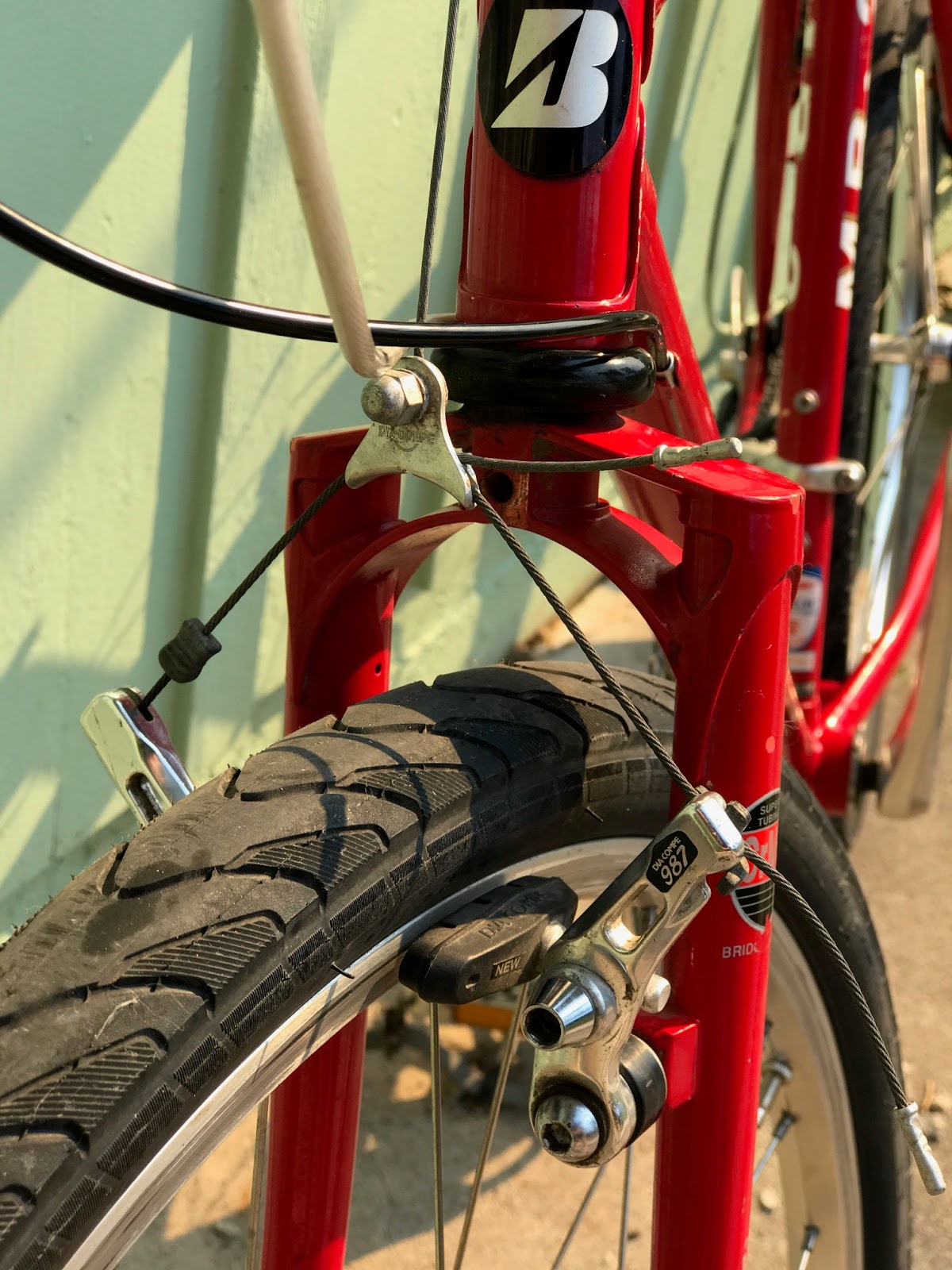
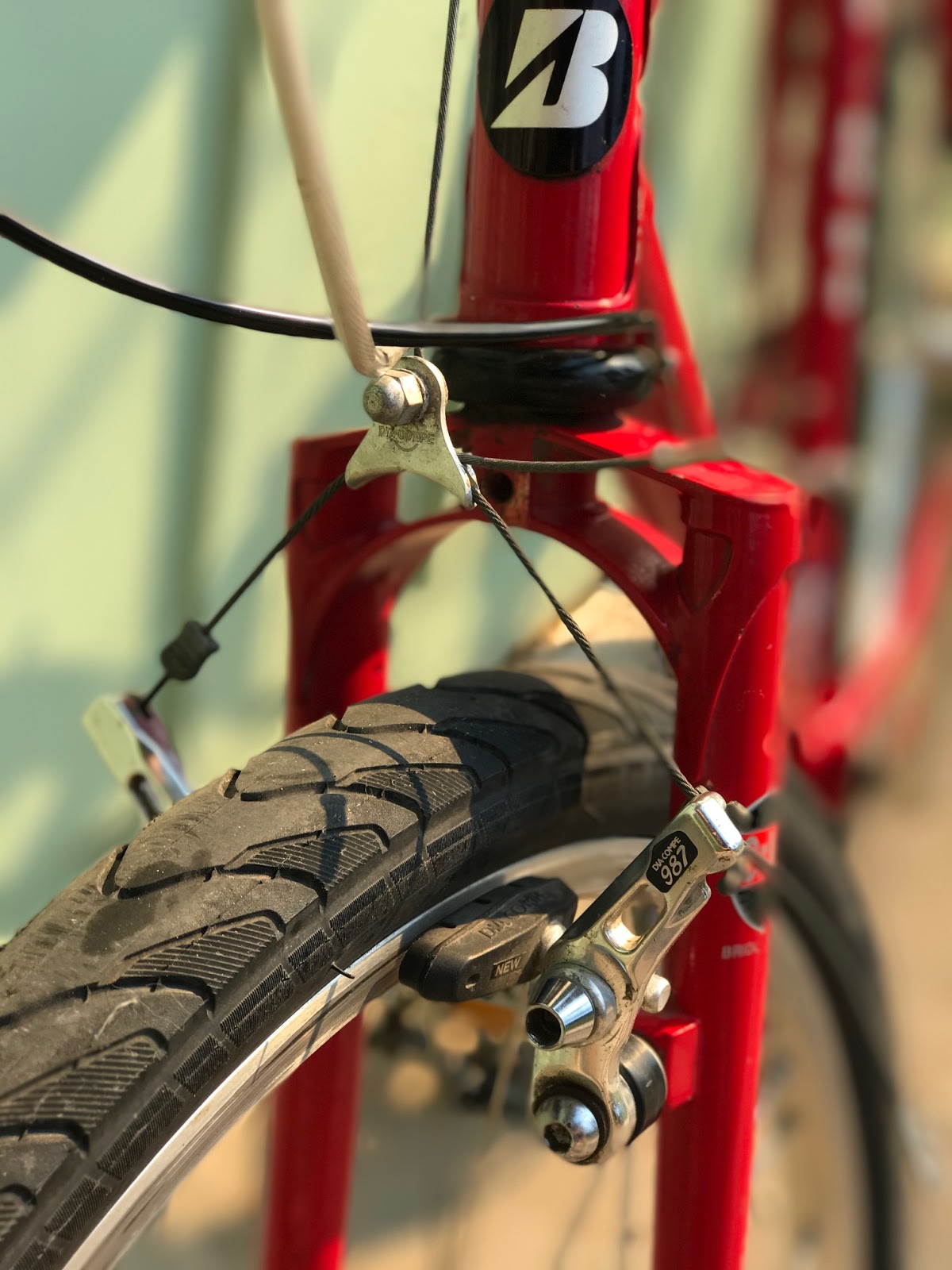
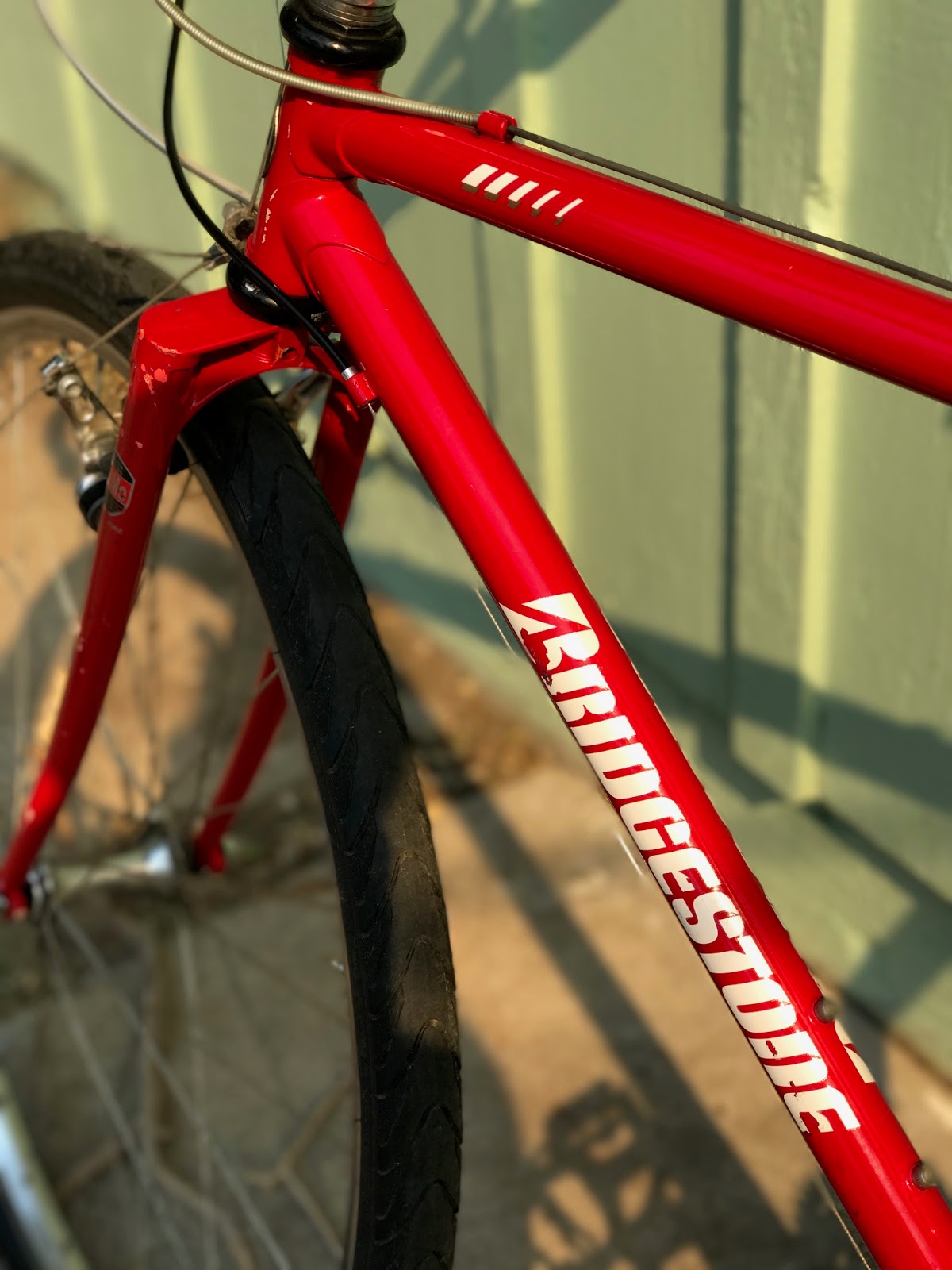
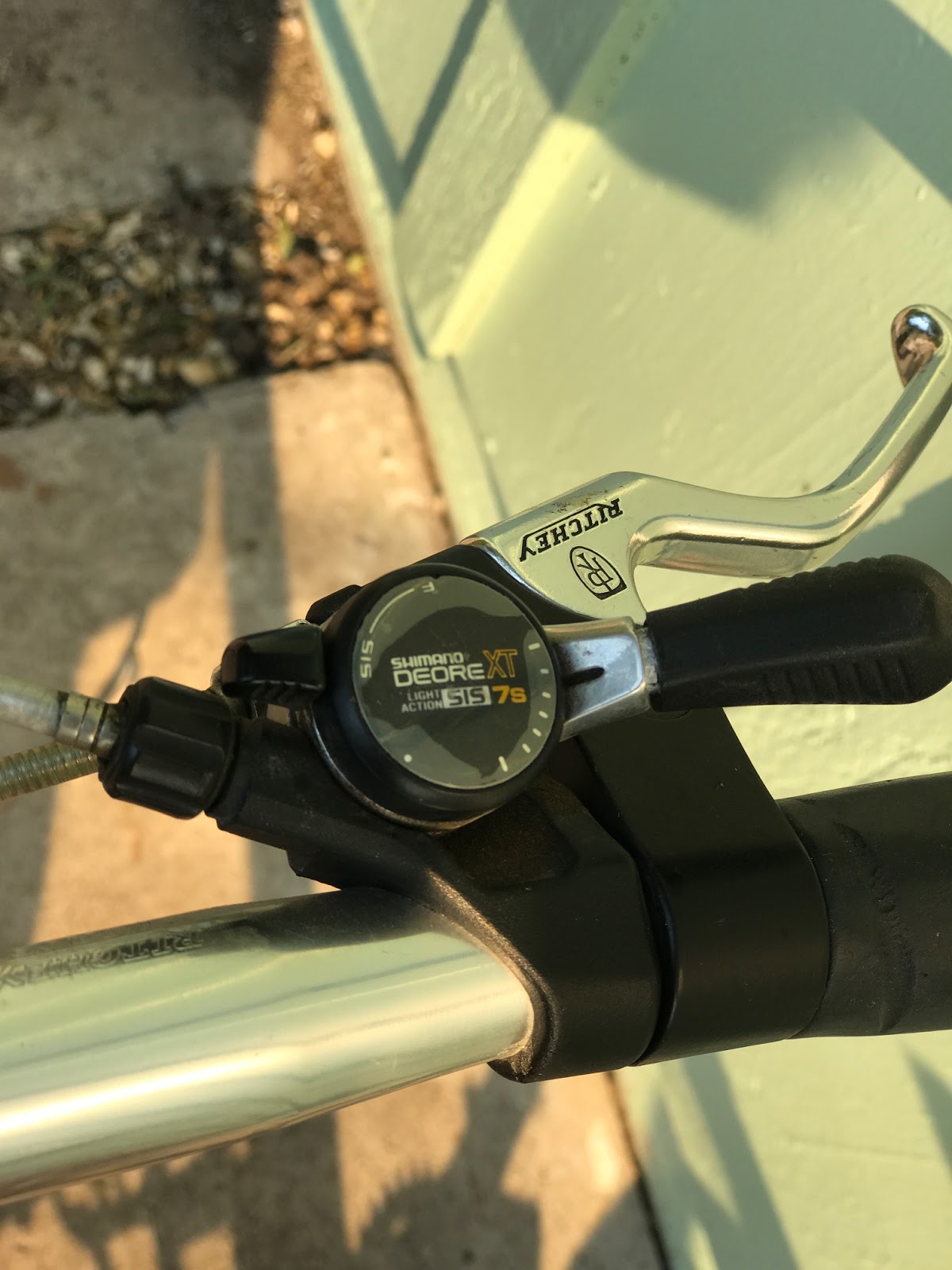
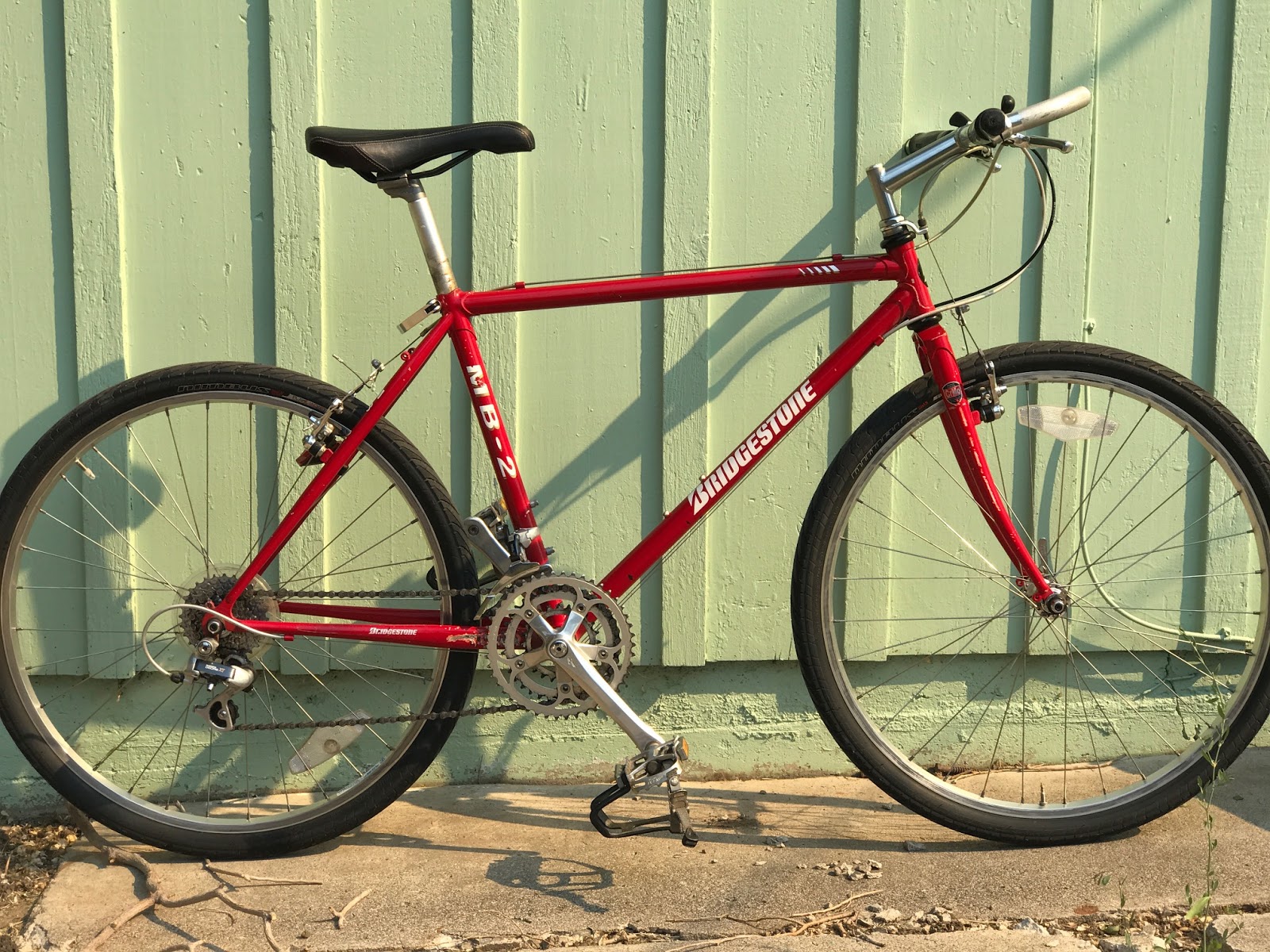
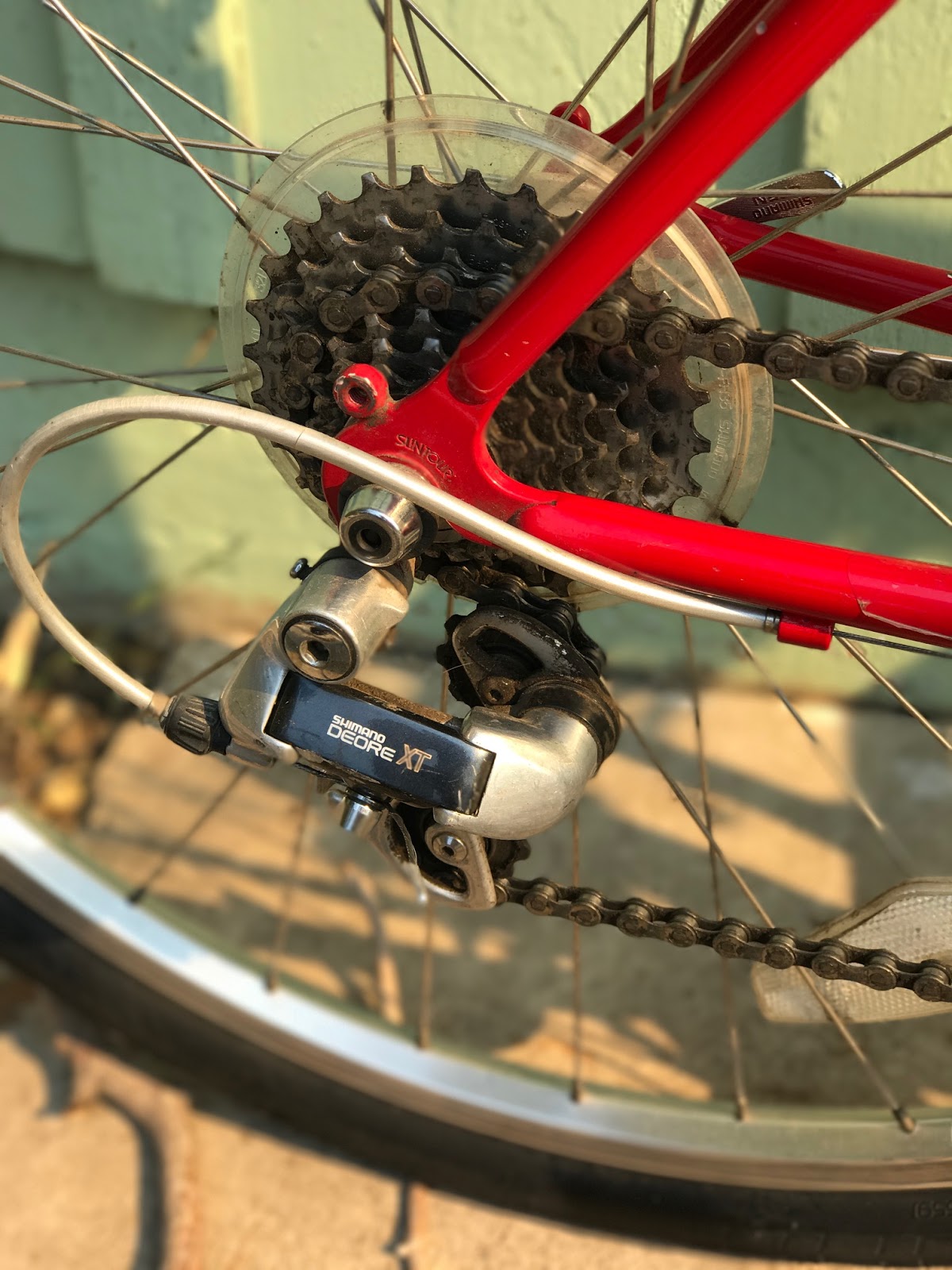
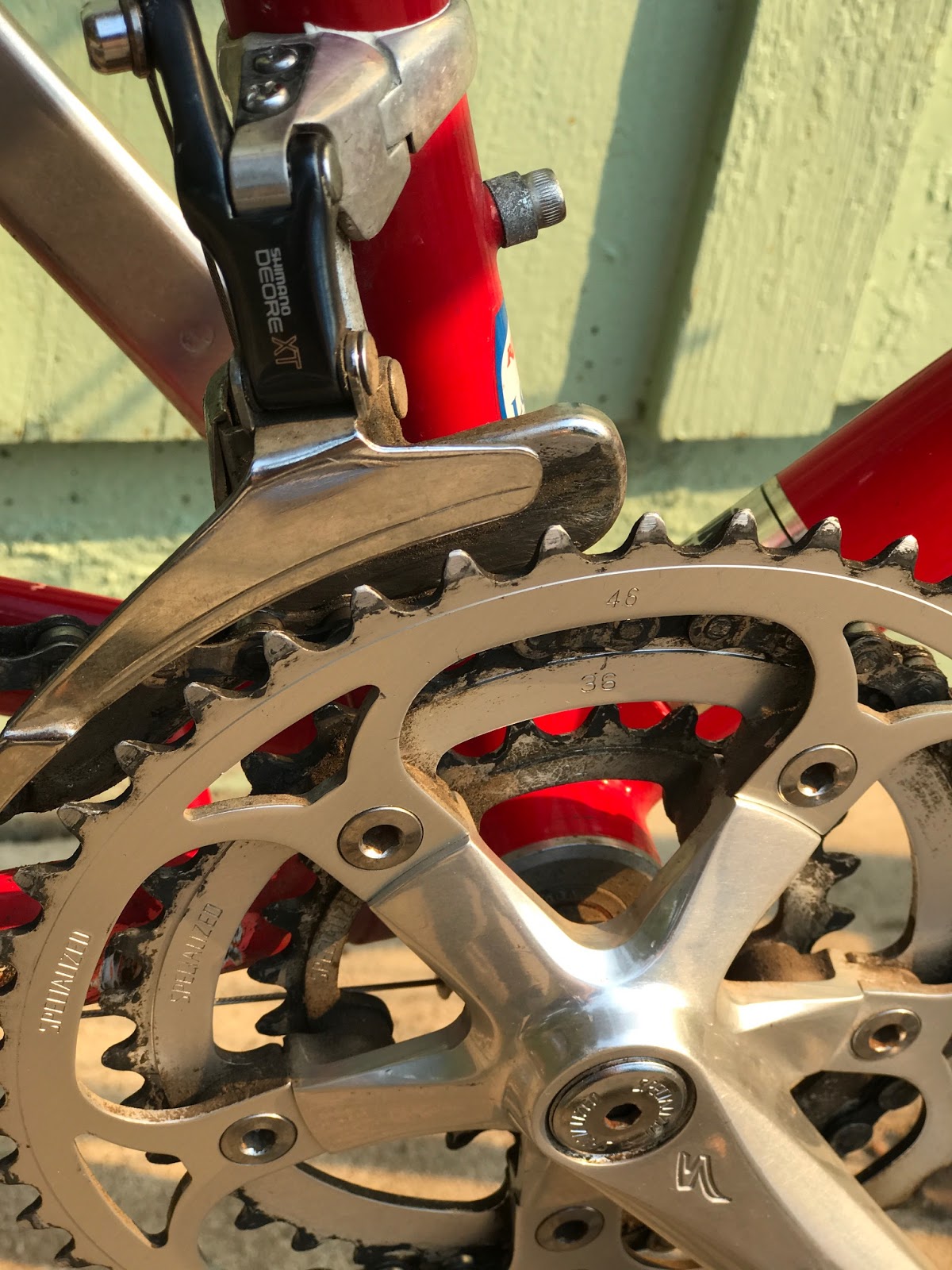
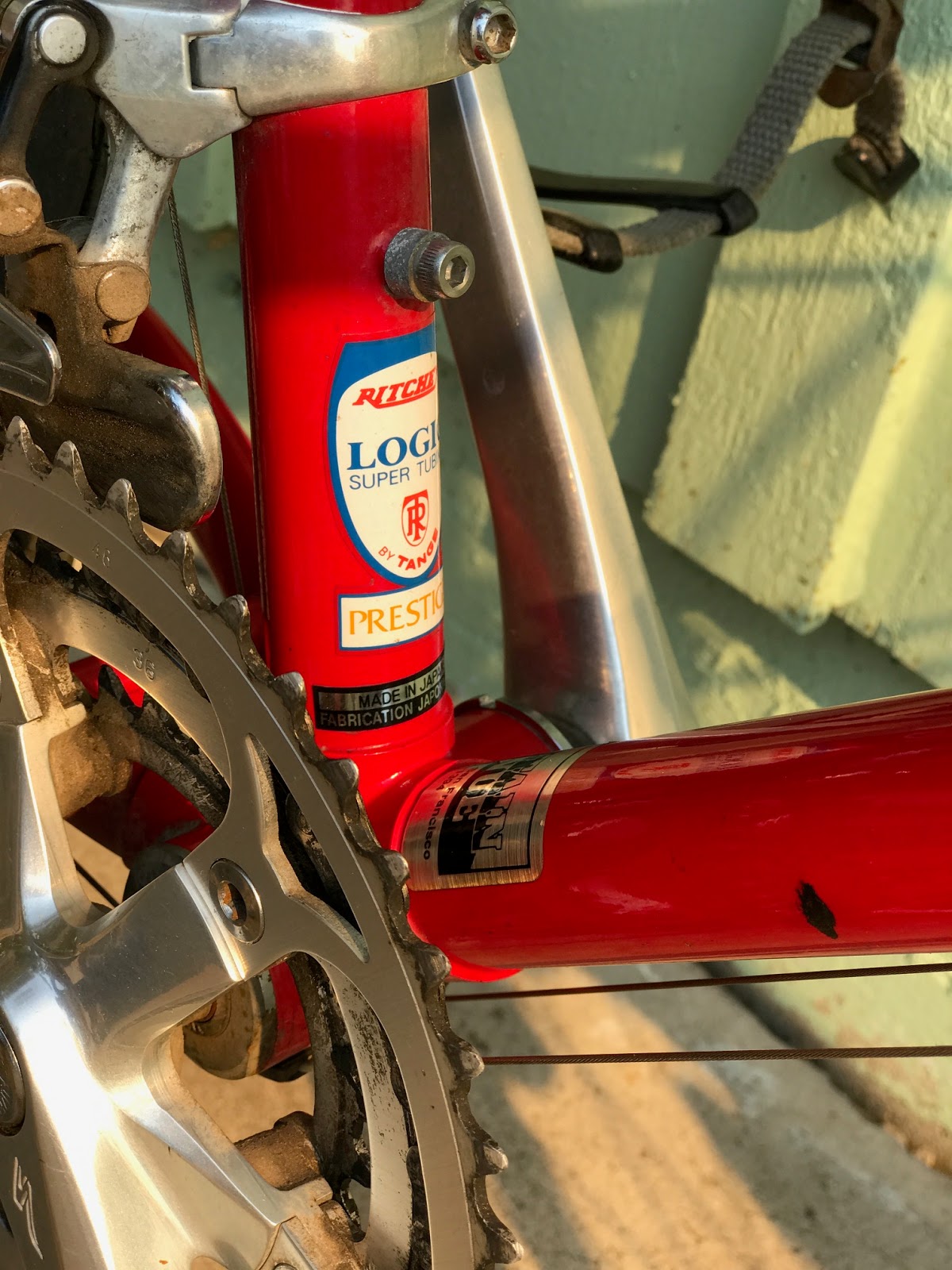
All this is to say, I lucked into replacing a bike that I've regretted selling for years.  And it turned out to be a local easy purchase at a very low price.  My 1993 Bridgestone MB-2 was originally purchased new from Deluxe Bicycle Works and was a great bike for the Midwestern single track.  I converted it over the years into something of a more citified bike with narrower city tires not unlike the ones put on by the original owner of this newly acquired MB-2.  It's not quite as in nice shape as mine from year's back.  But, a little elbow grease and love should get it back into good riding shape.  It still has a sweet Shimano XT group on it, nice Ritchey components, and that beautiful biplane fork crown.  A few photos to peruse until I spend some more time getting it all set up.


I'm not partial to barends but I'll leave them be for now.

0 Comments
    Bicycle Article Archive

    Author

    For over 12 Years I wrote the Reno Rambler Blog covering everything from Bicycle Advocacy, Reno Politics, Popular Culture, and my experiences as a long-time cyclist.  

    Archives

    September 2025
    March 2023
    January 2023
    June 2021
    May 2021
    April 2021
    March 2021
    February 2021
    January 2021
    November 2020
    July 2020
    May 2020
    April 2020
    March 2020
    February 2020
    January 2020
    December 2019
    November 2019
    May 2019
    March 2019
    February 2019
    October 2018
    March 2018
    February 2018
    January 2018
    December 2017
    March 2017
    January 2017
    December 2016
    September 2016
    June 2016
    May 2016
    March 2016
    April 2015
    March 2014

    Categories

    All
    Bicycle Advocacy
    Bicycling History
    Bike Tour
    Bridgesone Bicycles
    Della Santa
    Education
    Film
    Guitar
    Gunnar
    Homelessness
    Music
    NASA Rover
    Rivendell
    Transportation Policy
    Travel

    RSS Feed

Proudly powered by Weebly
  • Home
  • CV/ED Philosophy
  • Awards
  • Rambler
  • Classes
  • Hobbies